



By Aki
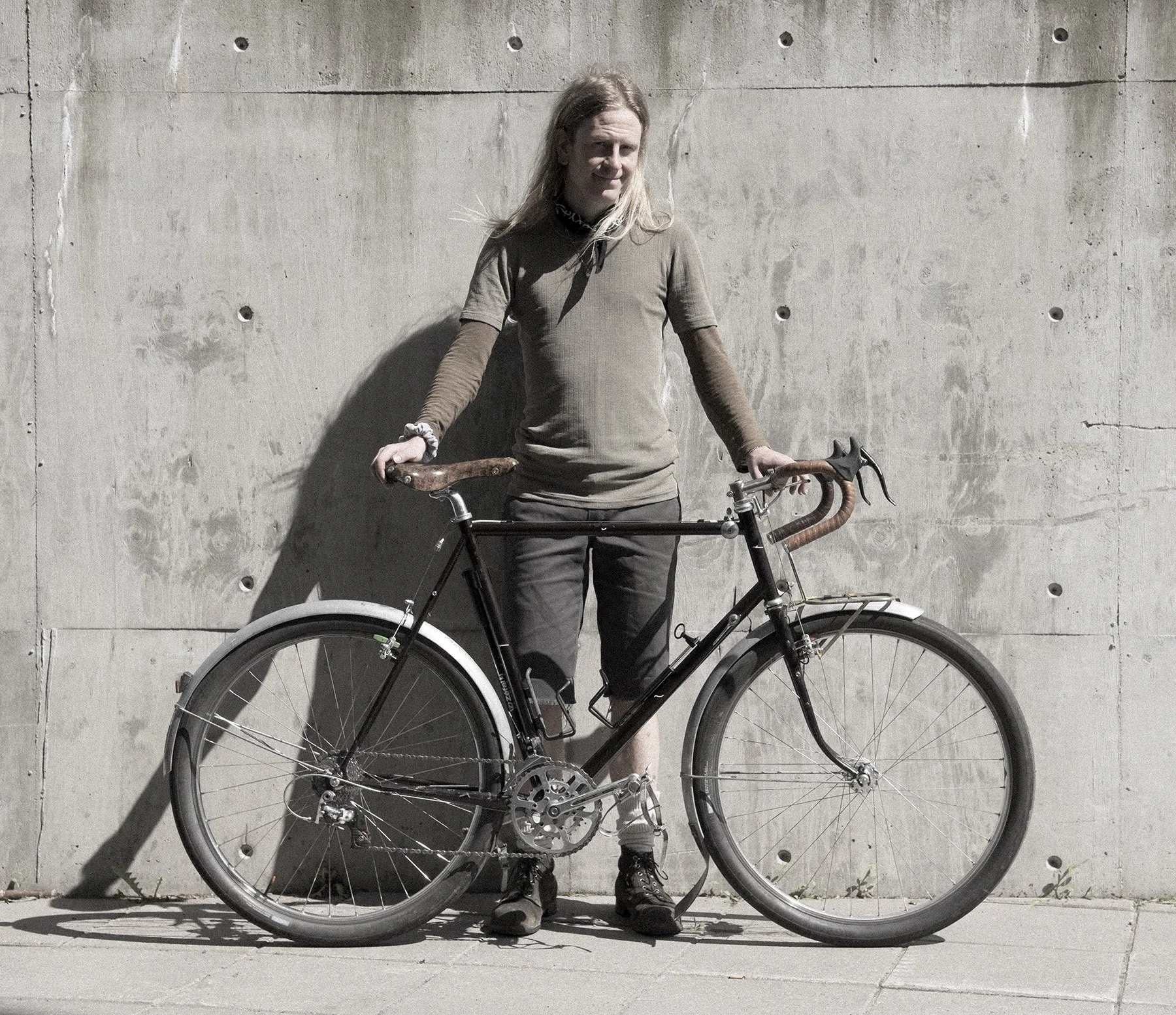
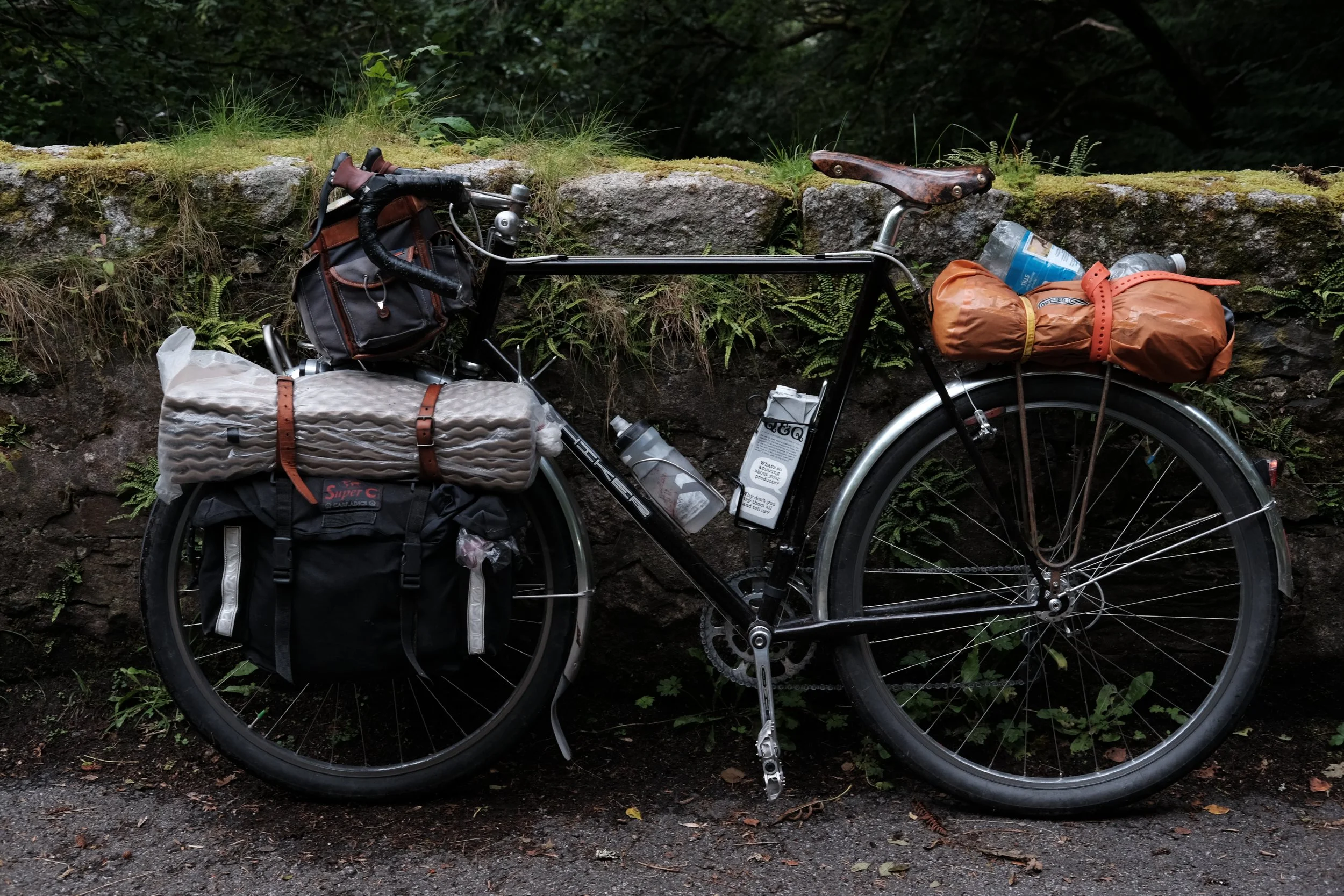
Like in any great realistic novel, the introduction of the main character begins with an introduction of the elders of said character. In the case of my prototype Hike-Use bicycle, the predecessor is called Myyrä, a touring bicycle I have built around a 1940s french 650b frame and which I rode almost exclusively in the few years preceding the whole Tunk project, and still ride today quite regularly. Myyrä has proven to be very well designed, useful and reliable for all kinds of general riding and touring. So it was clearly fit to be the starting point for the first Tunk model. The French cyclotourists and artisans of the golden age knew what they were doing.
Of course I have experience with about 20 different bicycles of several types before this, but they are maybe then the persons of the cultural milieu, not this bicycle’s direct bloodline.
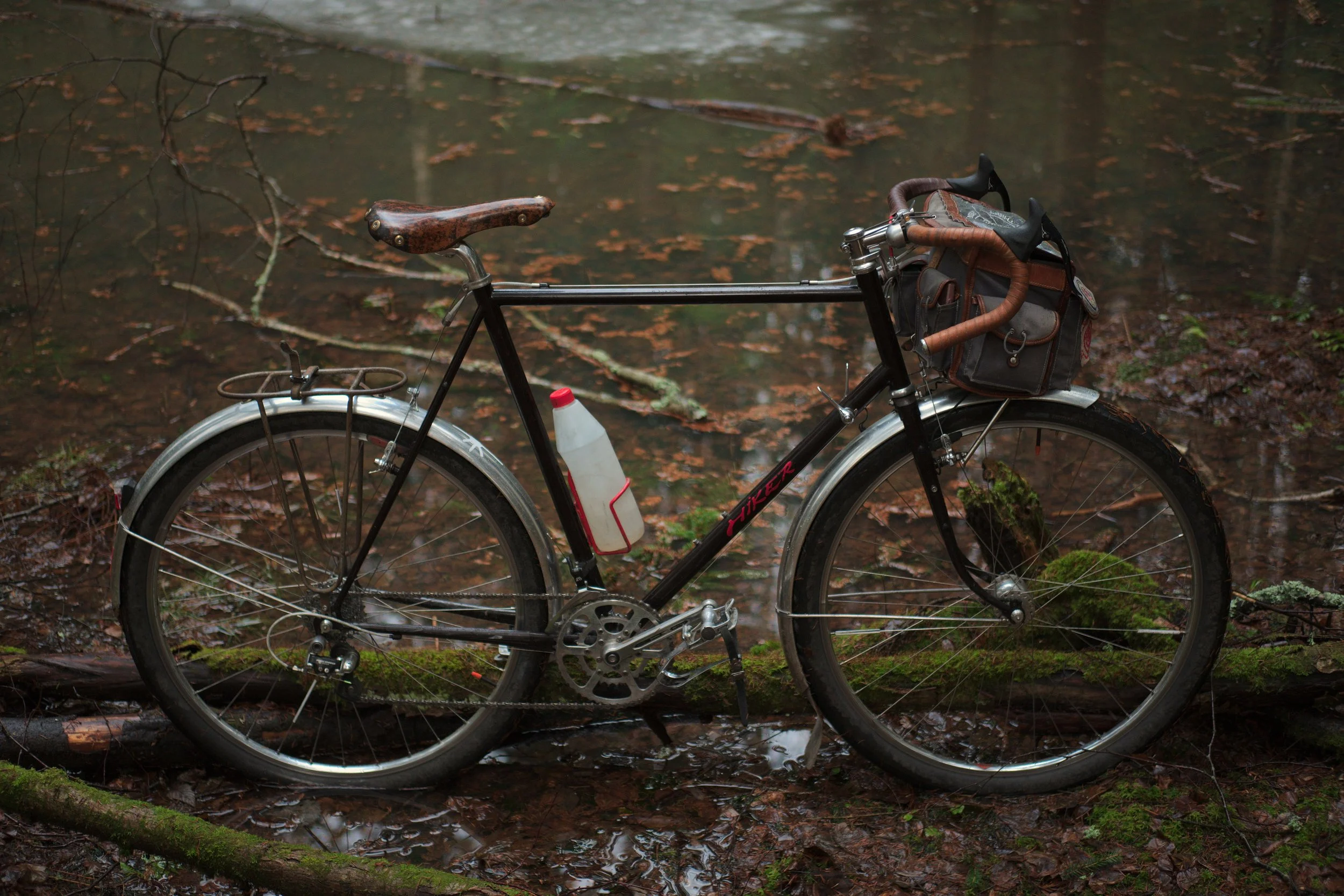
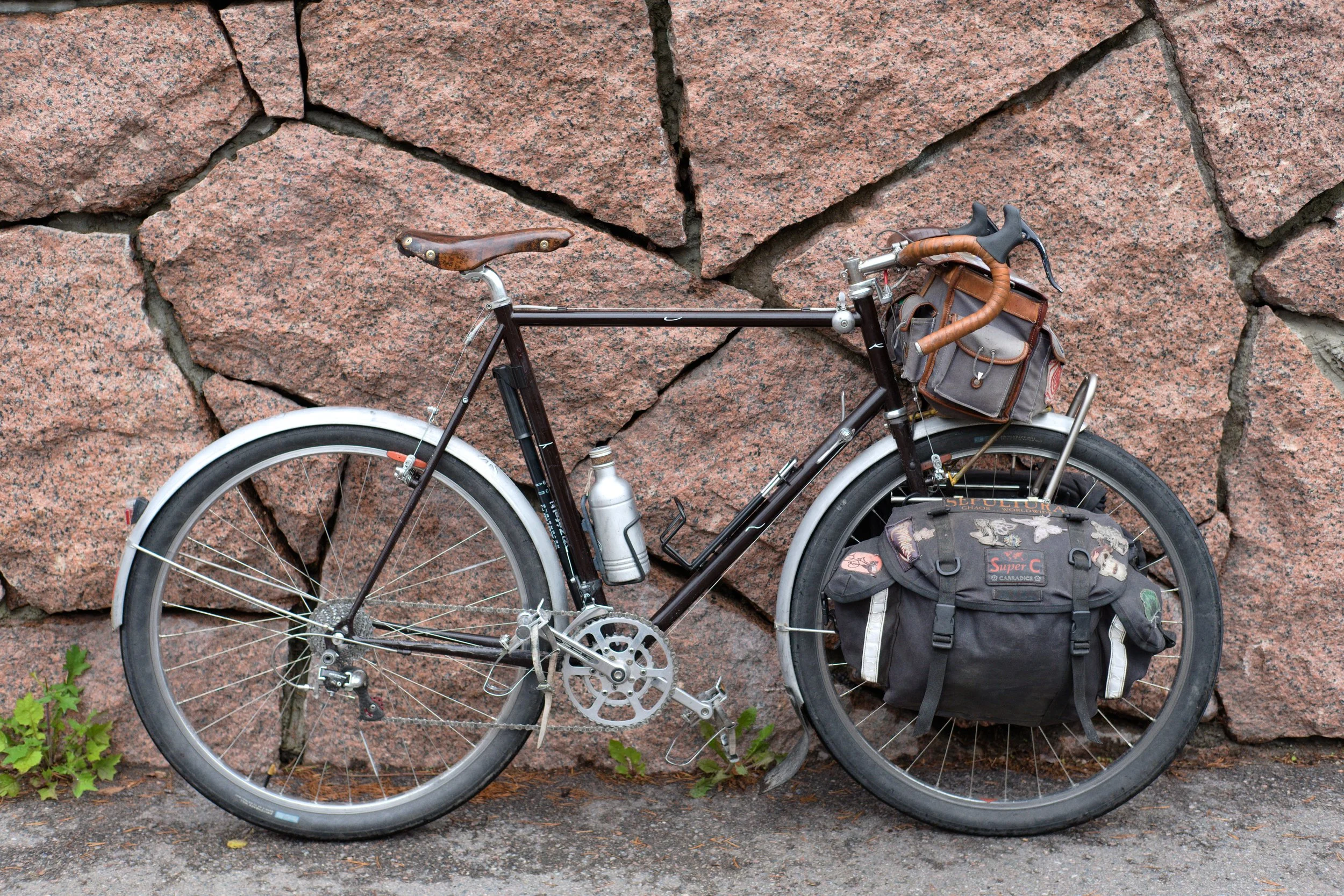
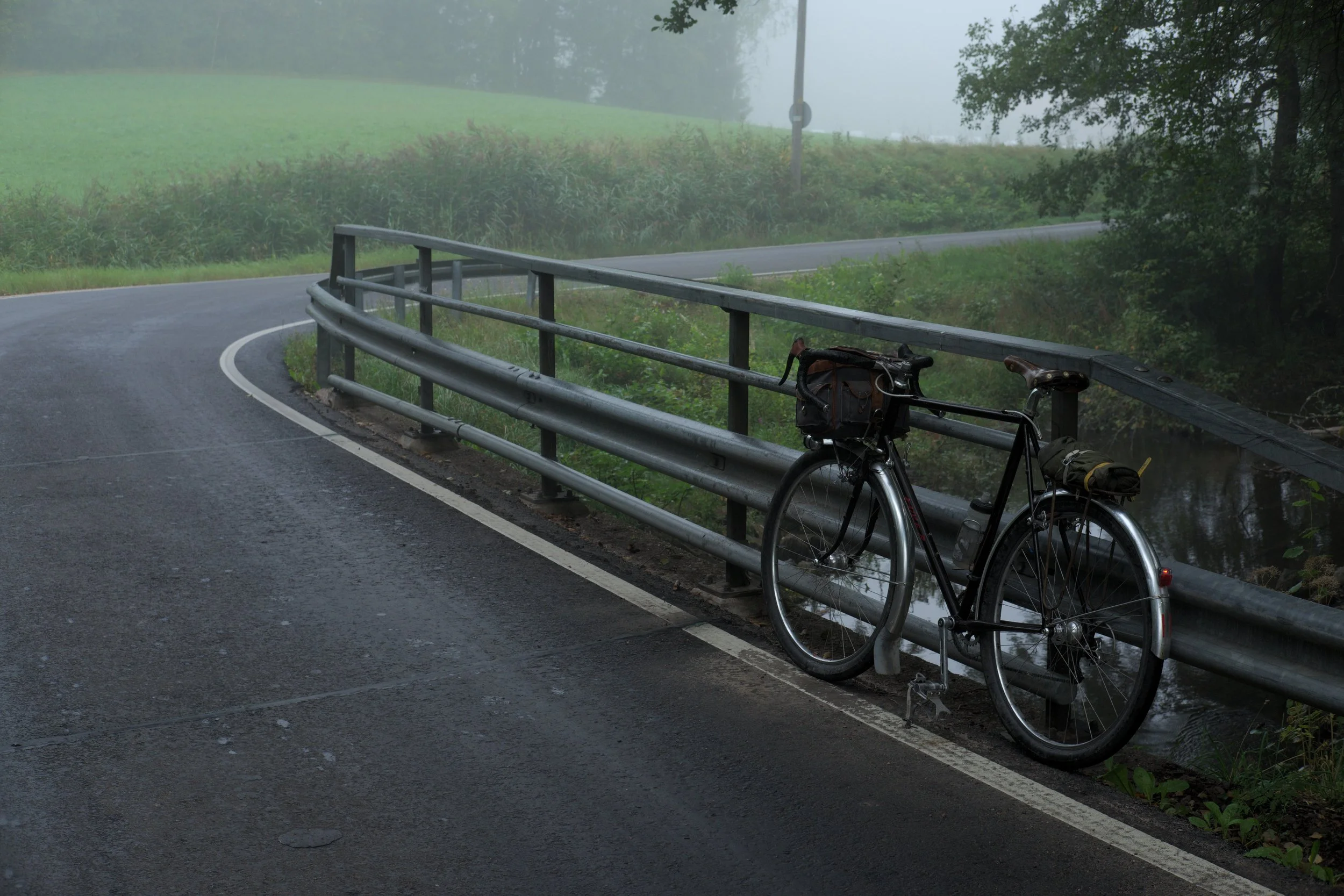
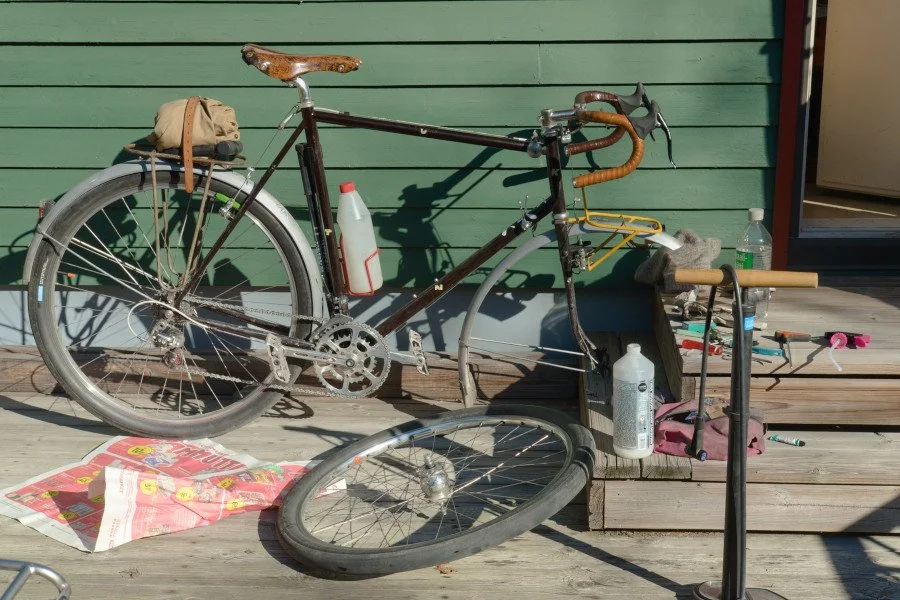
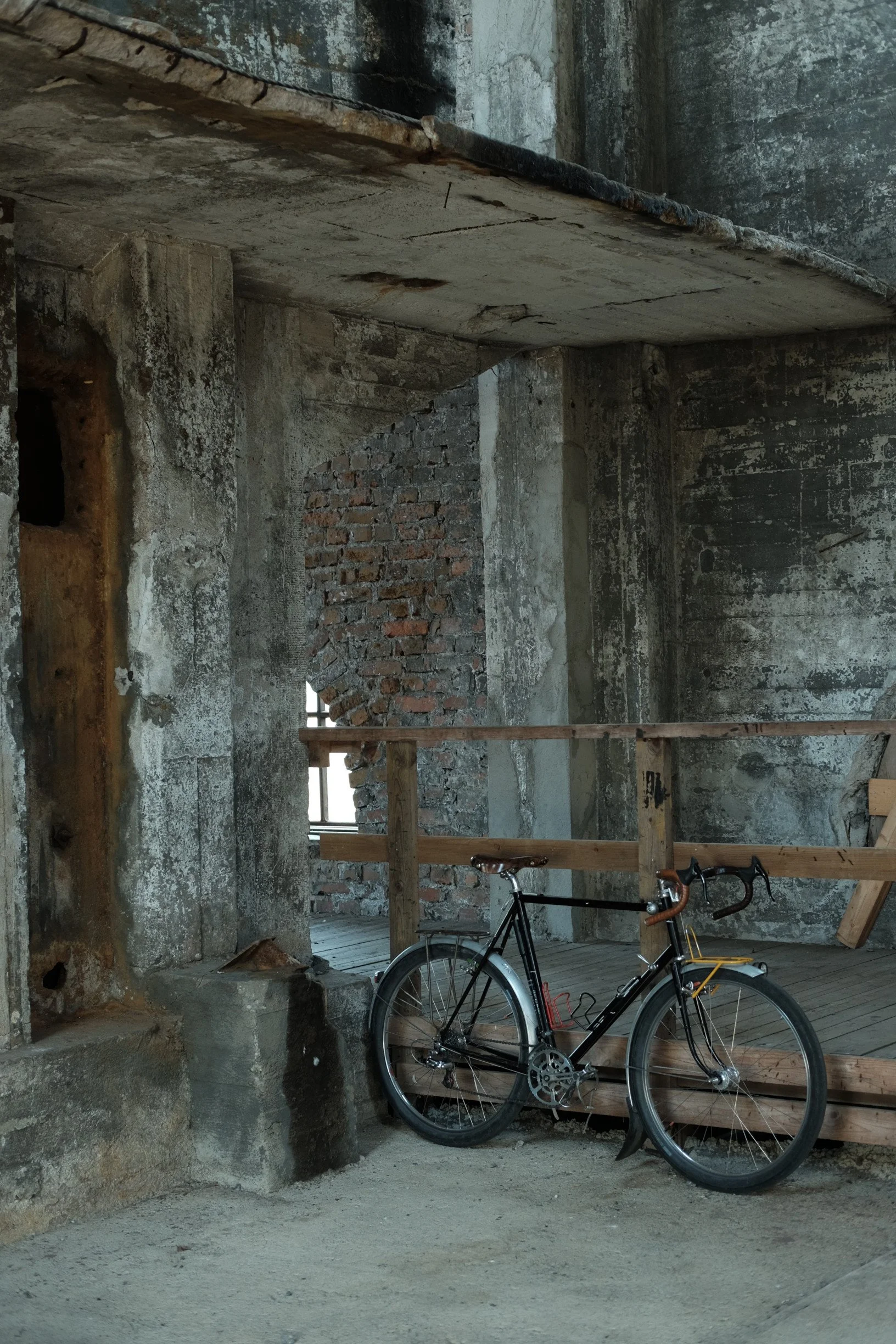
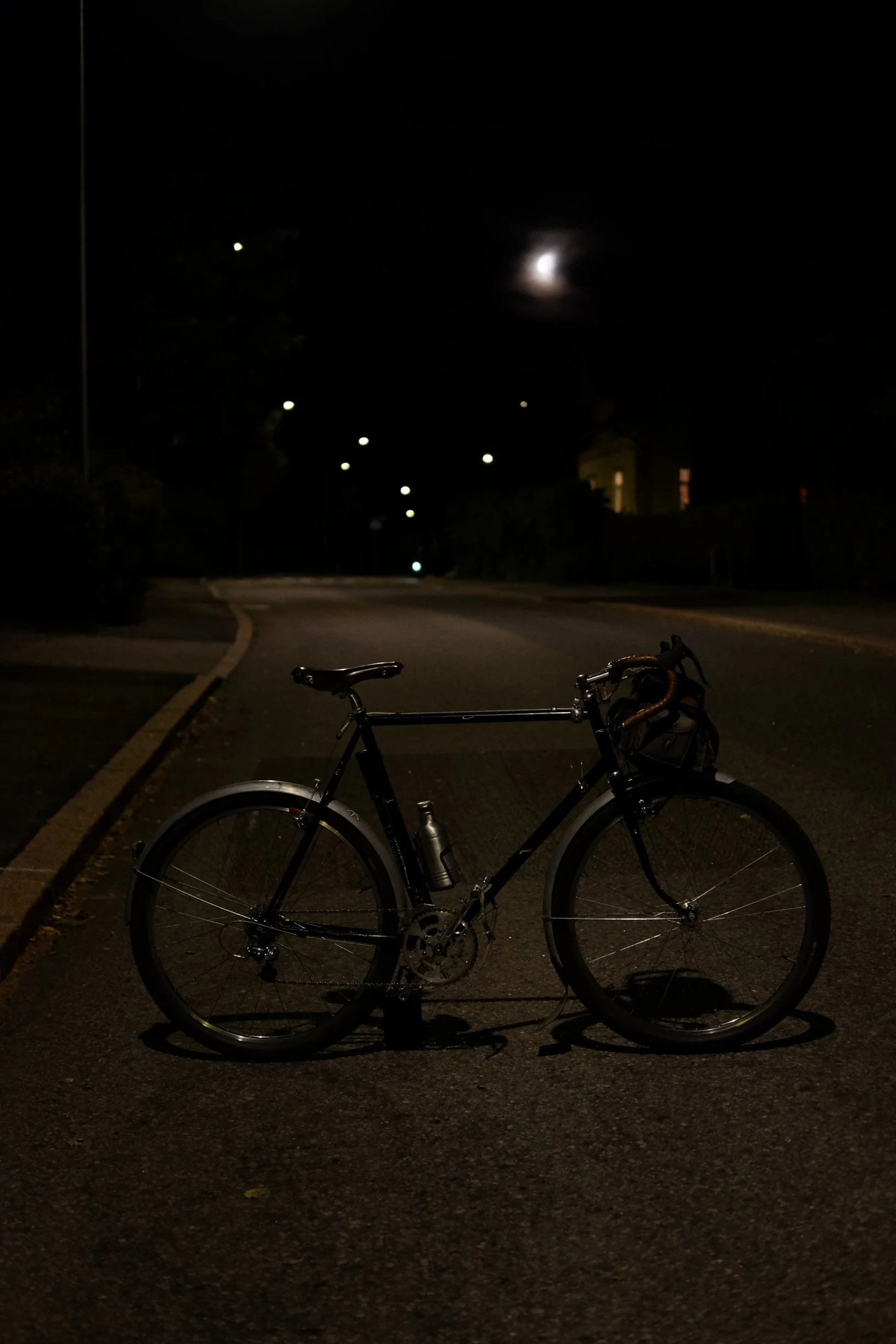
The prototype in size “59” that I have ridden for the last 2 years now described here is actually a 3rd generation proto-model. The 1st and 2nd generation prototypes will maybe be covered in a “historical Tunk bicycles” episode later on. They were unrefined alpha-versions as frames and as complete bicycles and thus I will concentrate on this beta-version. If I find the time, in the next week or two I will build up the final release version of the same frame. But I figured this bike deserved a full introduction.
As this prototype is basically a refined copy of Myyrä, which then basically is a proto-proto-Hike-Use, it was quite clear from the beginning what kind of parts I was going to use, as I wanted to replicate a similar feel: ‘randonneur’-shaped narrow drop bars, wide tires, canti brakes and down tube shifters were all clear from the start. Even the handlebar bag would be made to fit the new bike with the same decaleur (bag holder) system. Just the good old stuff that has worked well for me.
For the production version frame that I’m in the process of building into a bicycle, I am tempted to try out some different type of setup, but that is mostly due to vanity and the charm of novelty, not driven by necessity.
Like said, the use for this type of bicycle for me is all-around riding: commuting, day trips, sportier rides, long distance riding and loaded touring. These are the kinds of cycling I like best and mostly do and in this context I have been very happy with both Myyrä and the prototype.
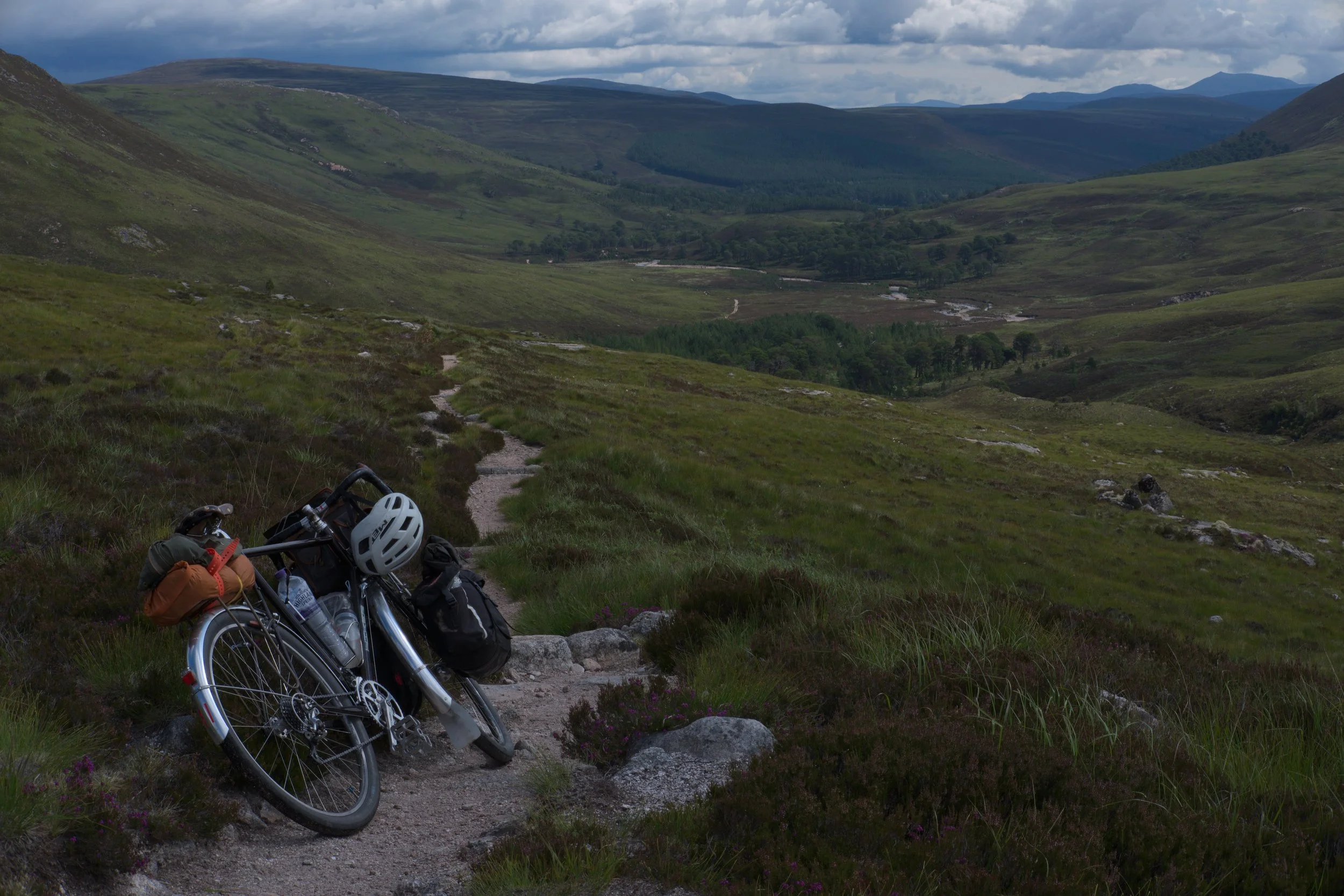
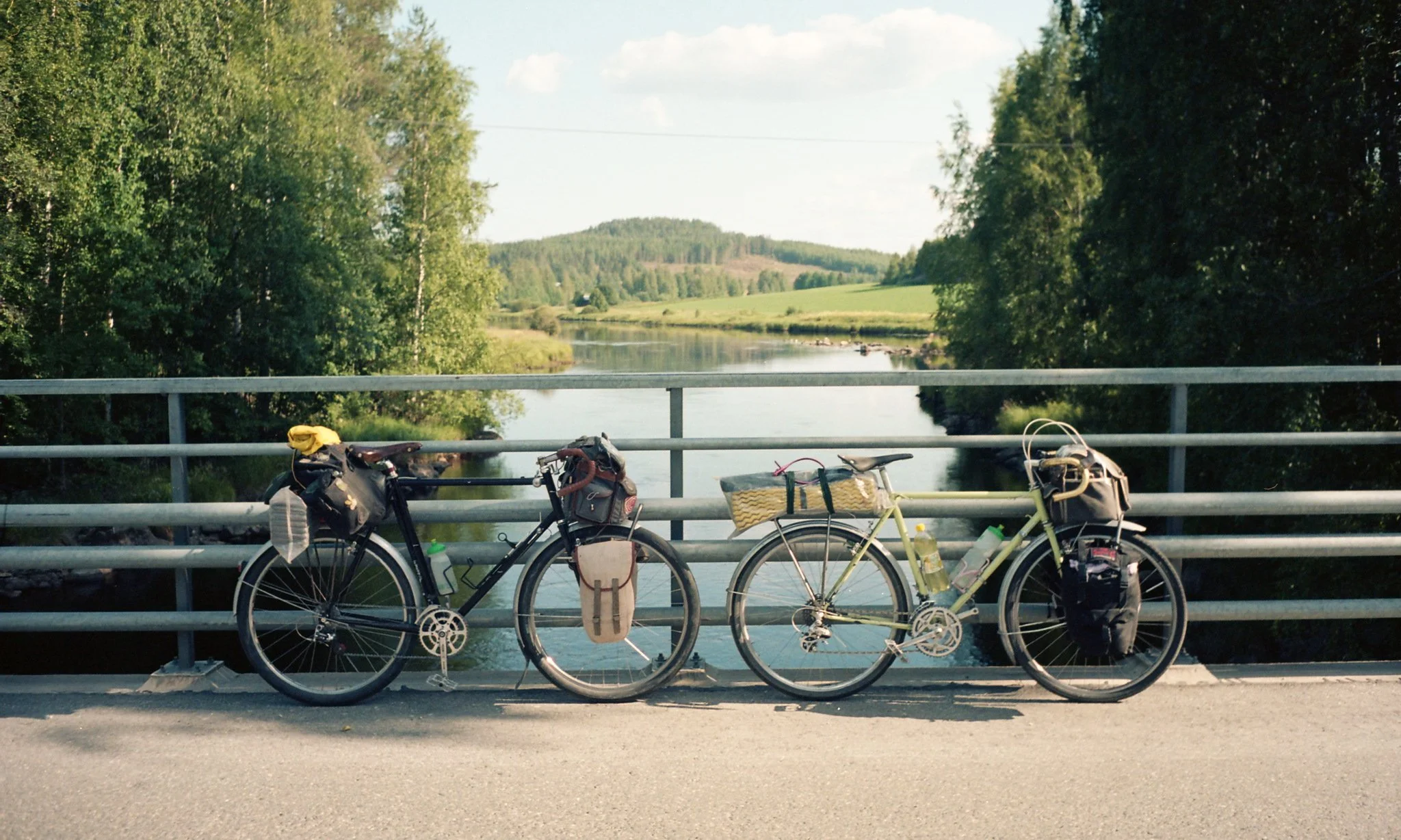
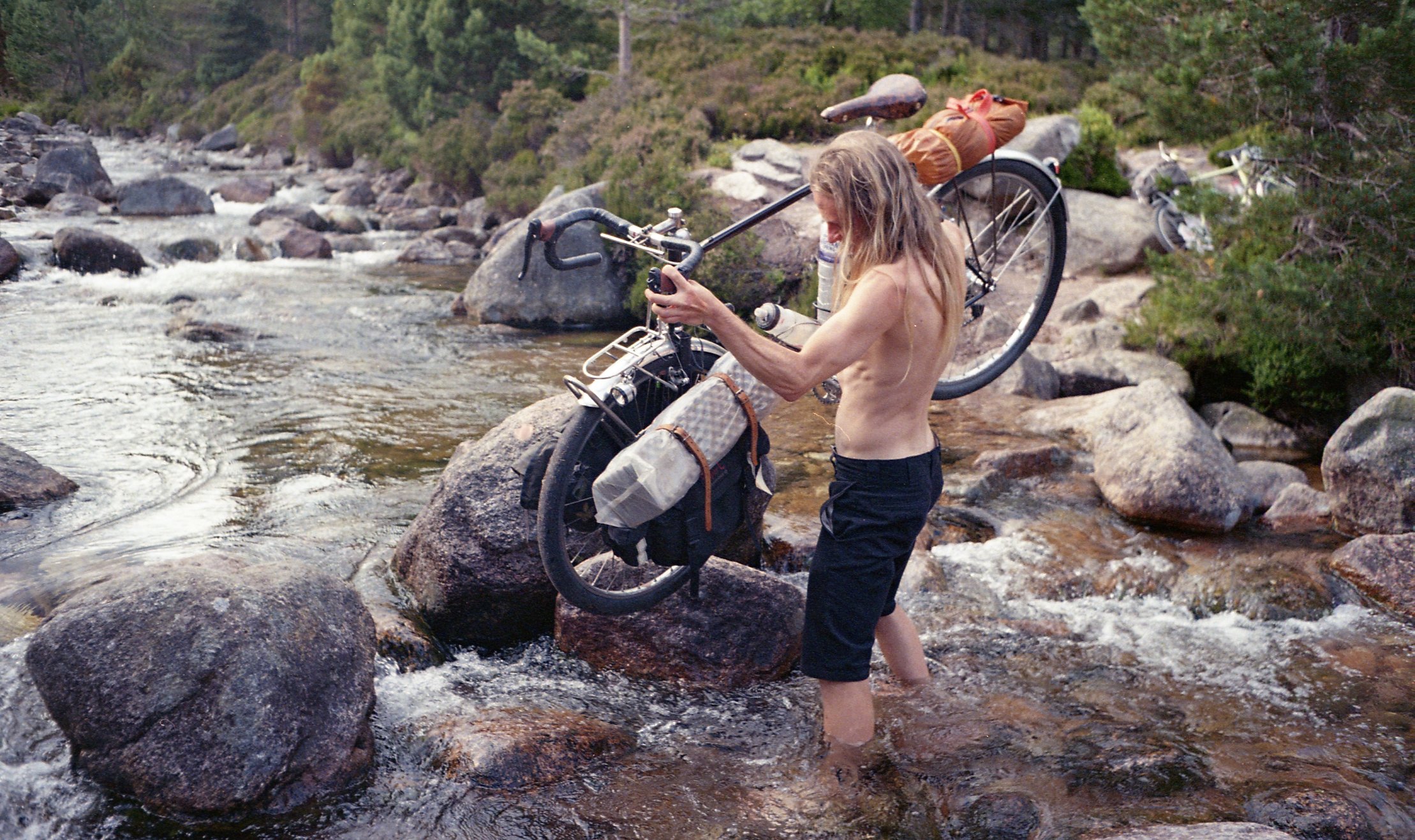
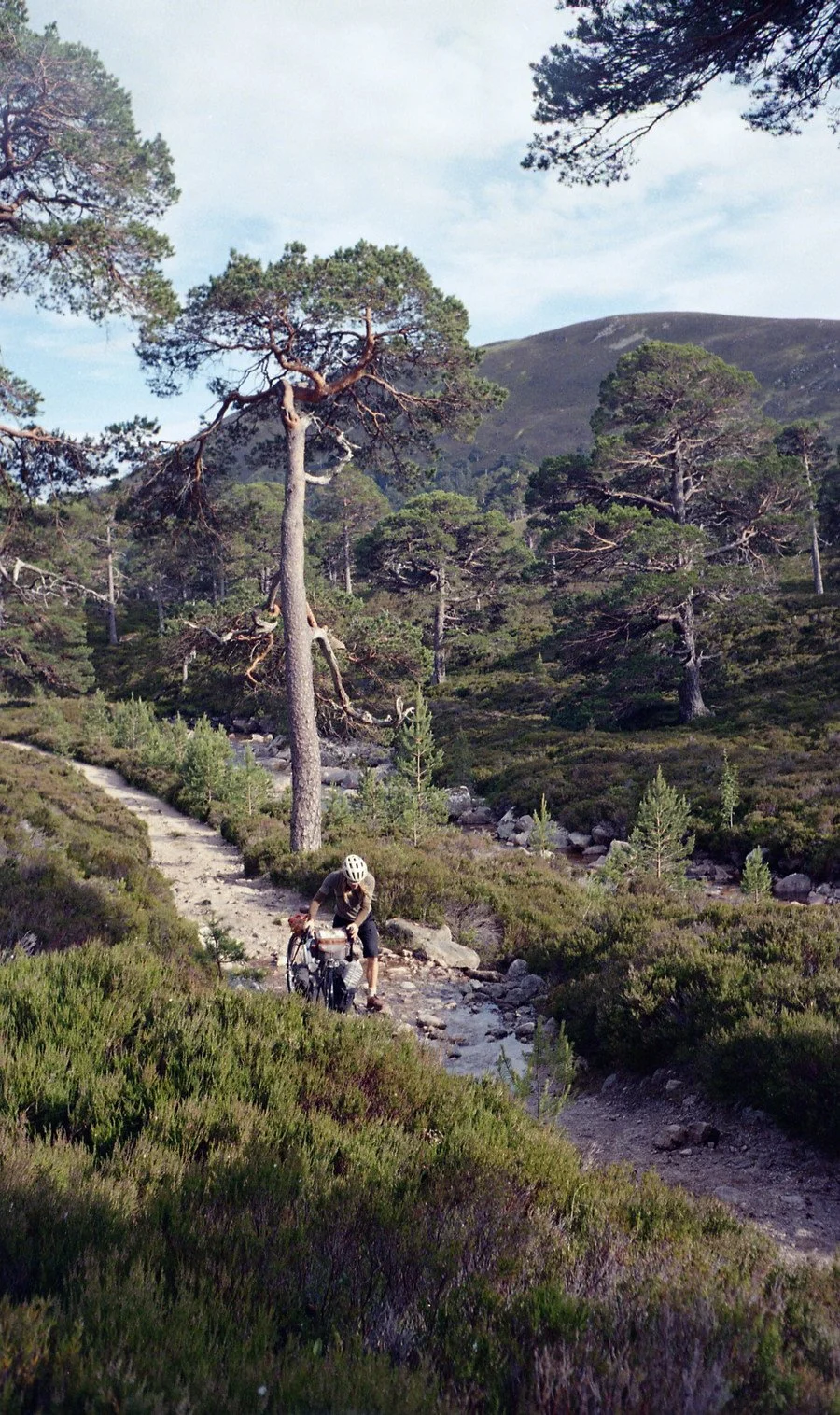
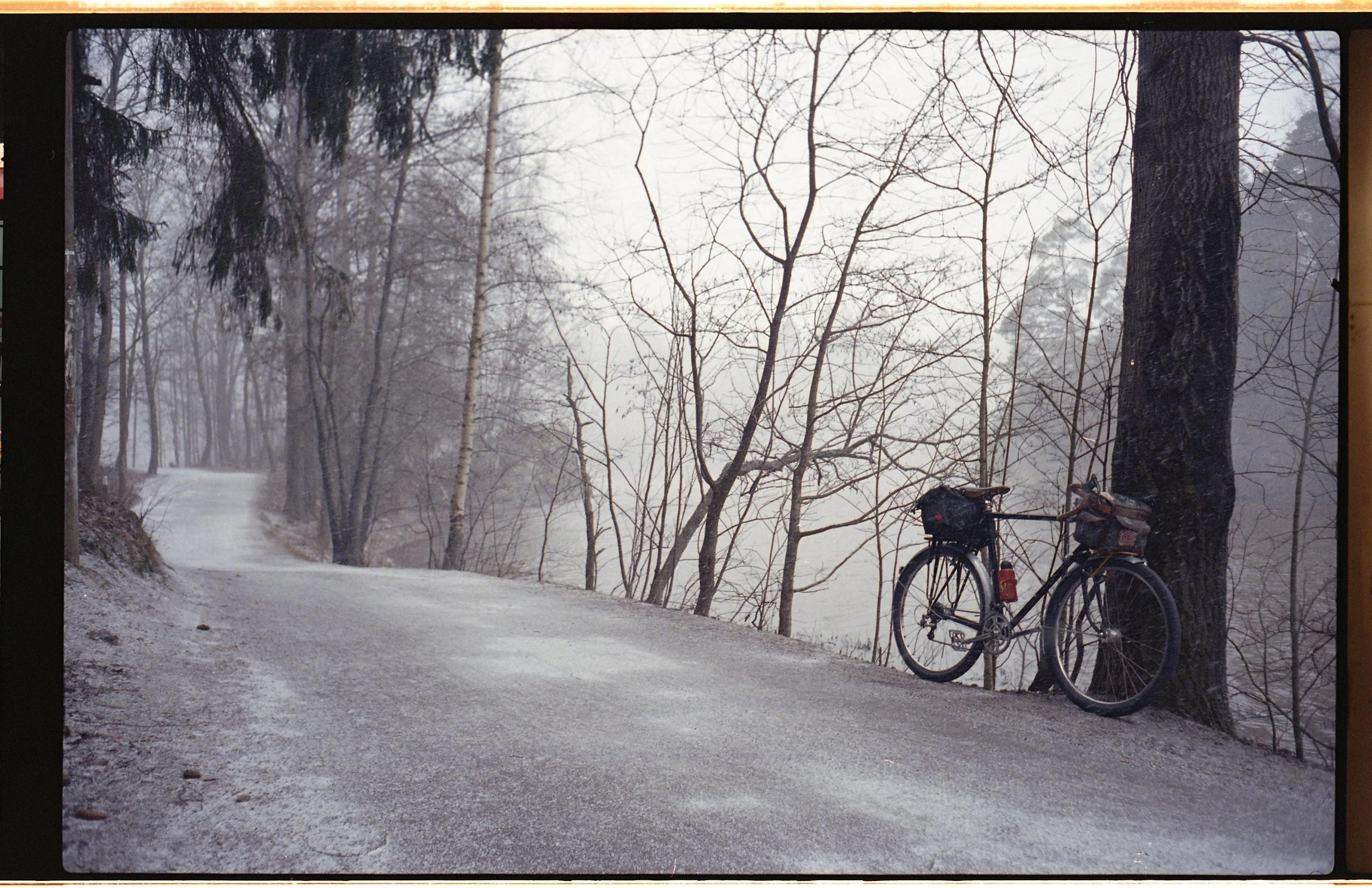
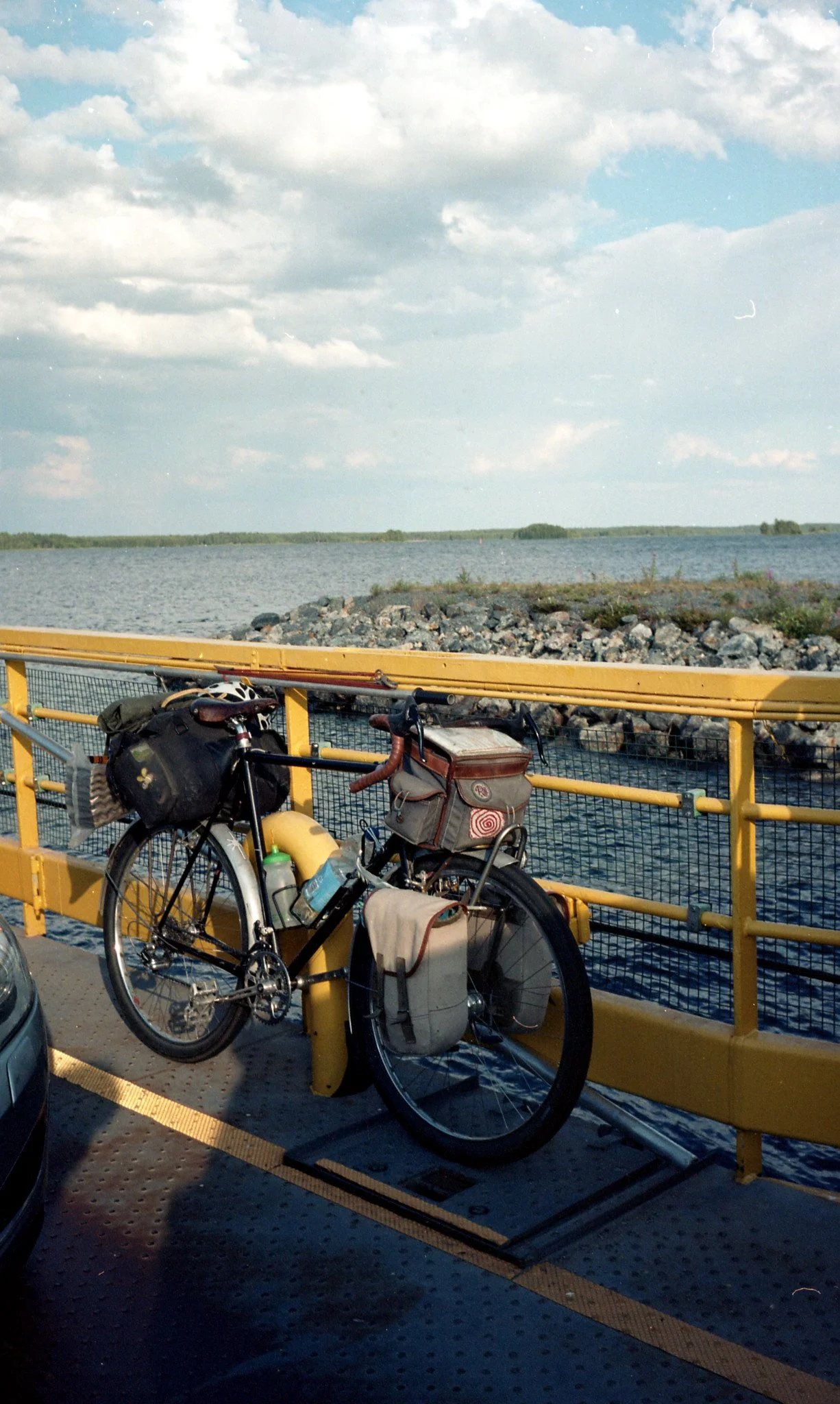
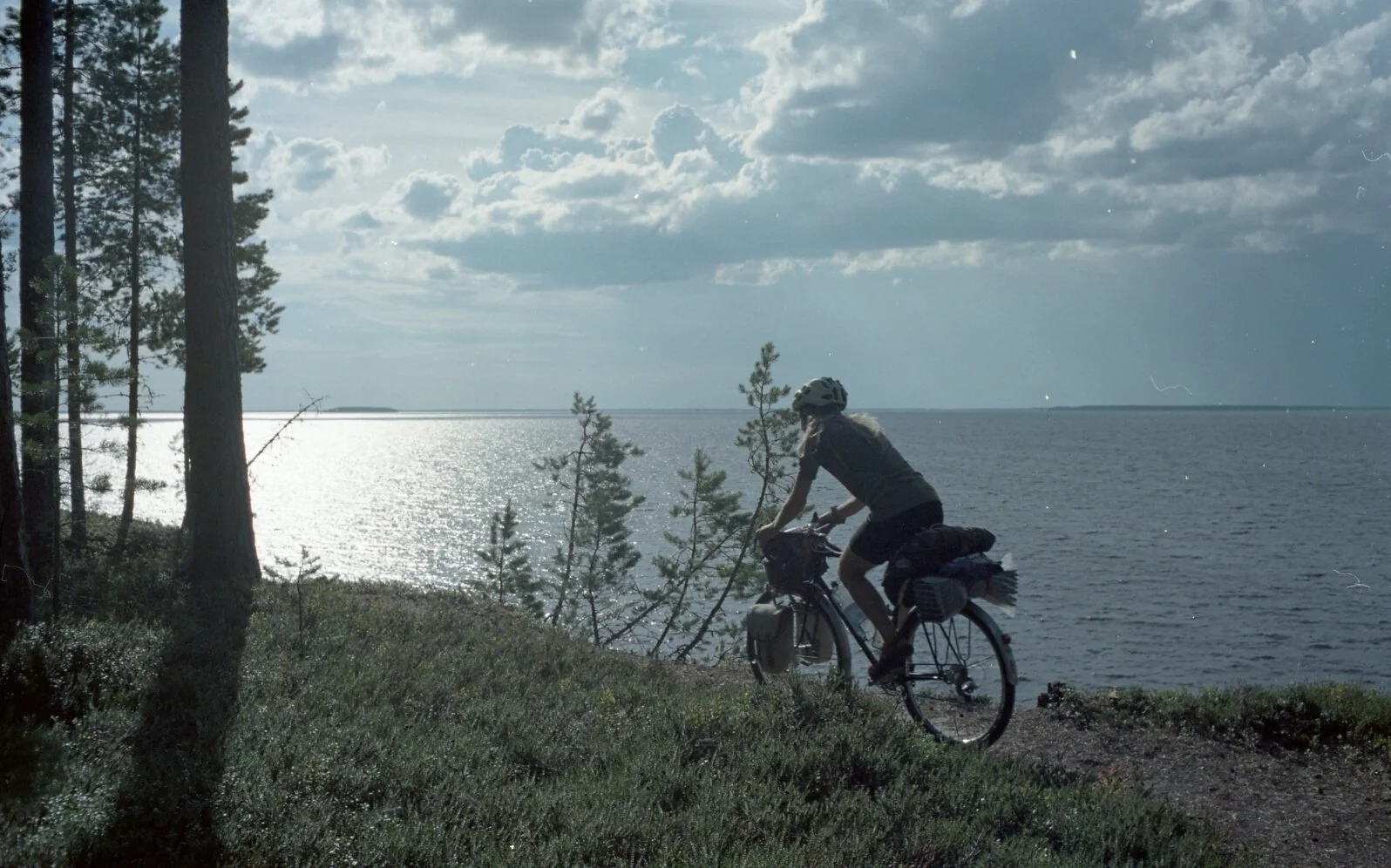
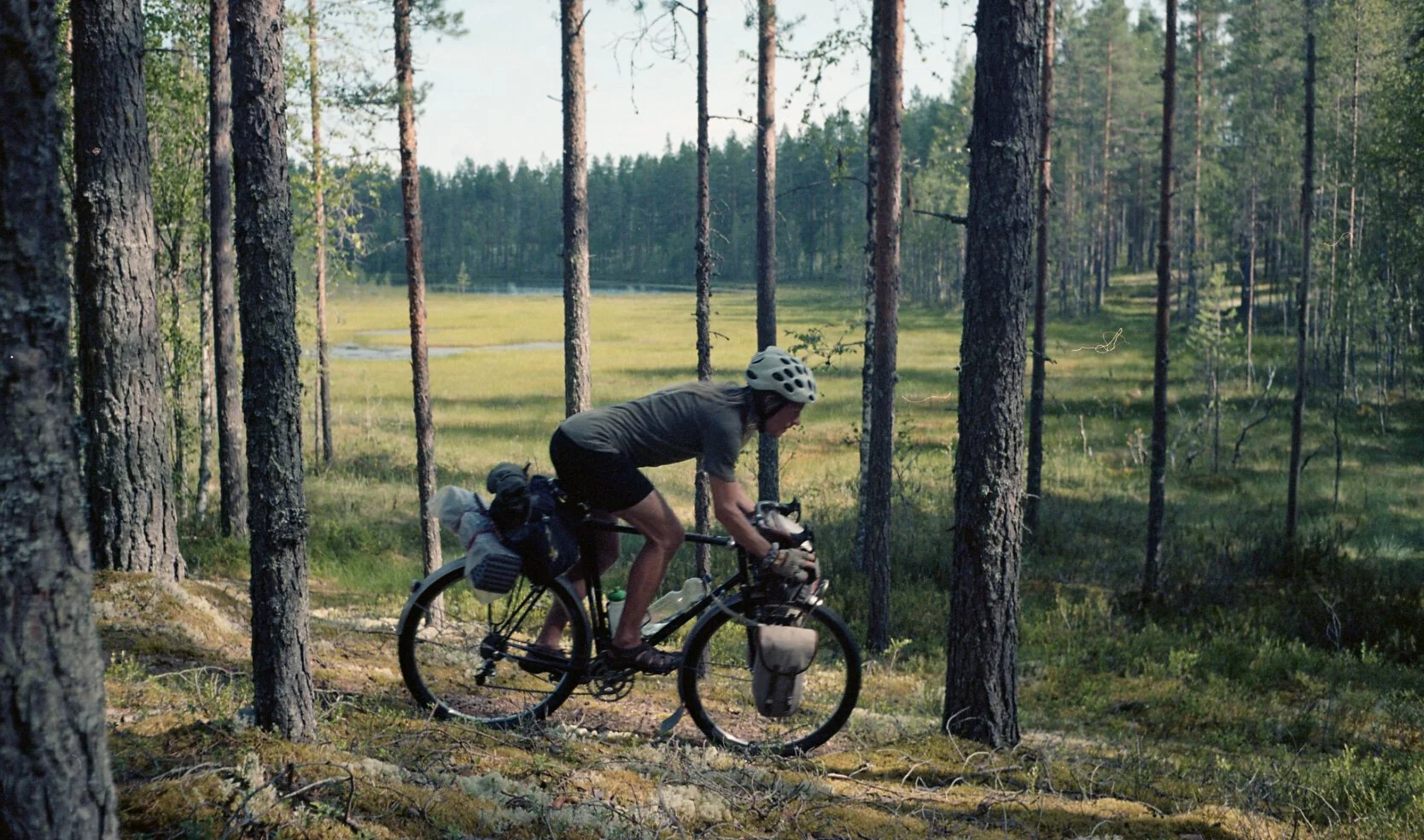
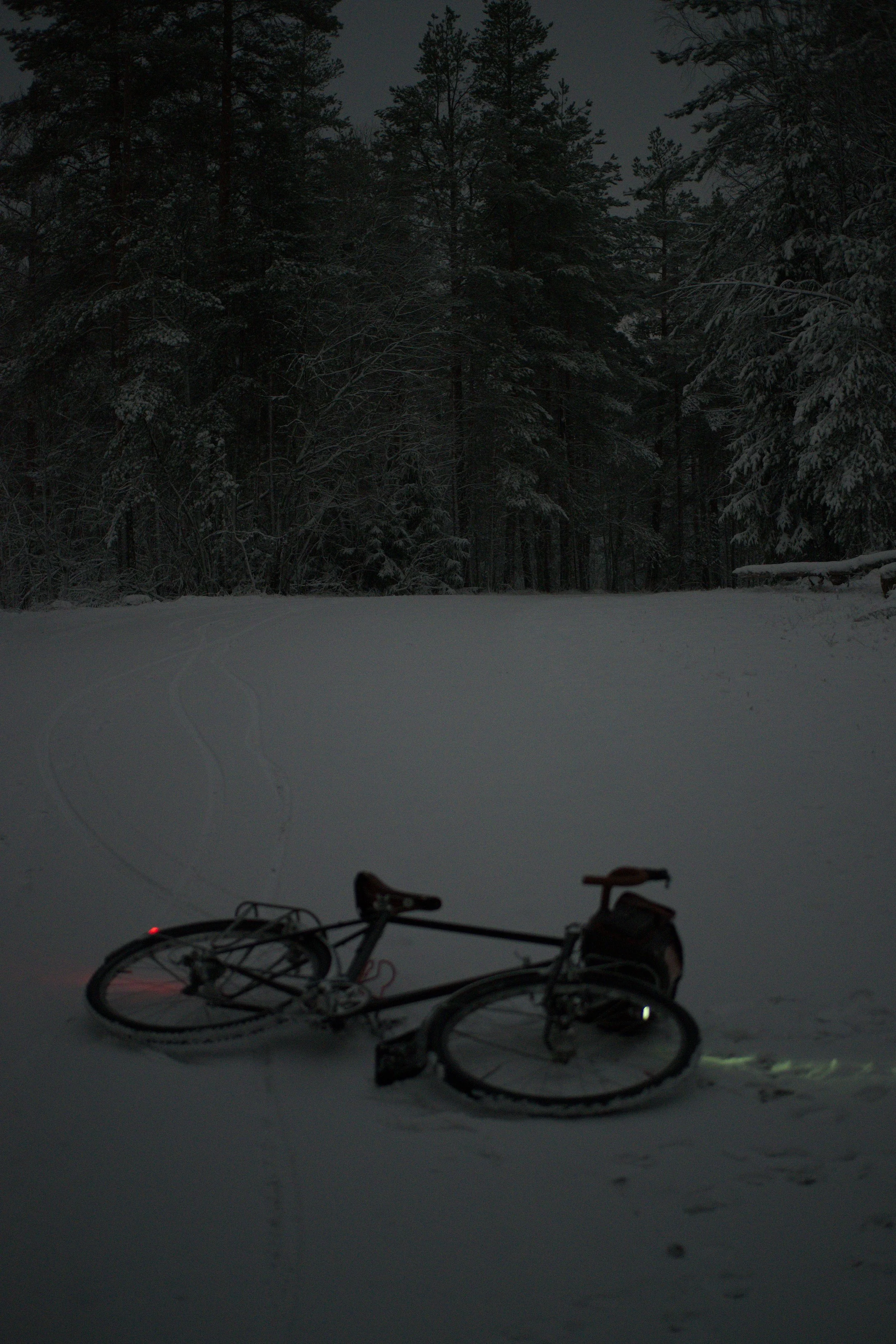
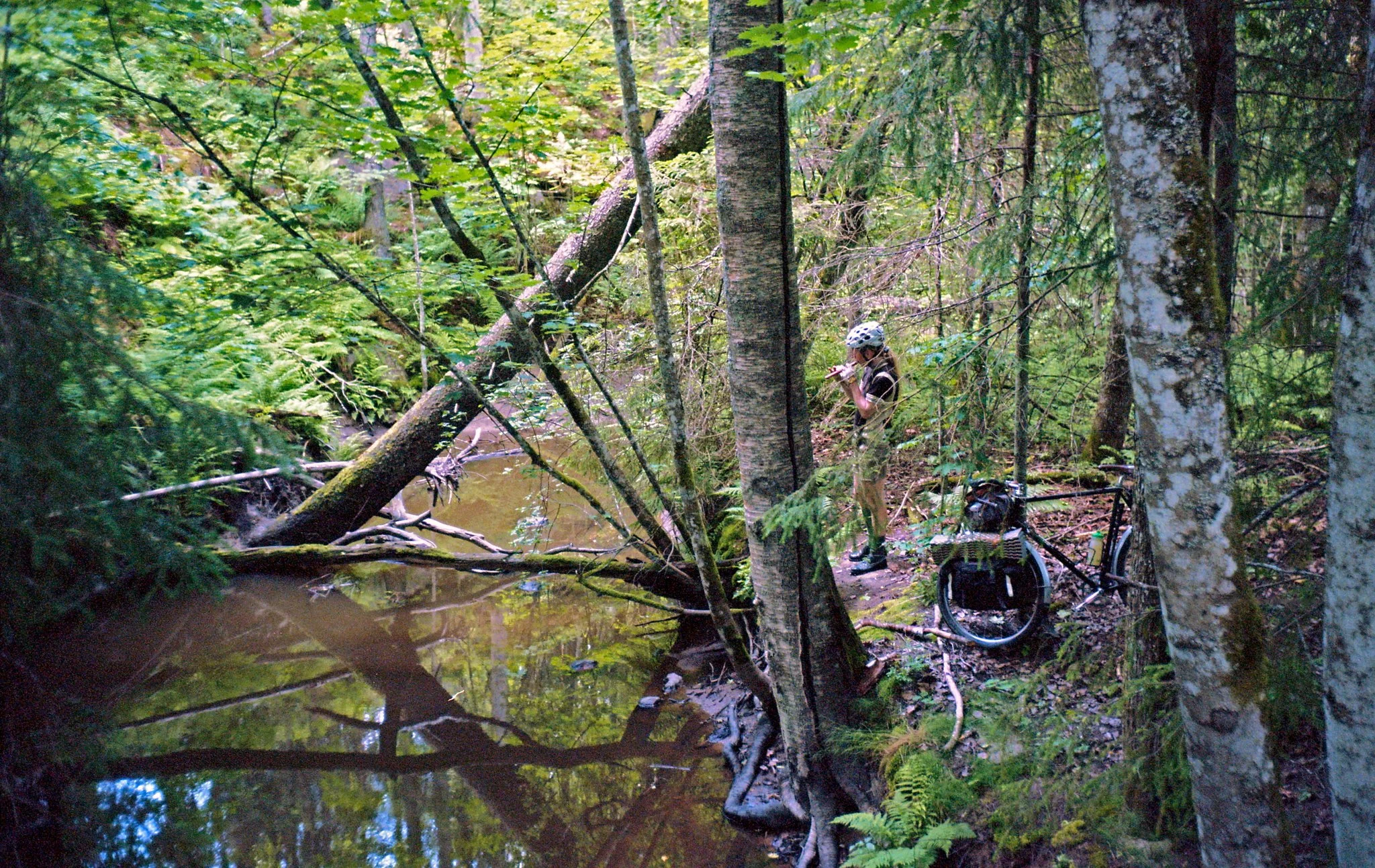
The H-U has seen around 20,000kms of riding after I got it about two years ago. So it can be said that it has proven itself, and I mostly know how it works and what is it like. We have done countless of commutes and errands, weekend and weeks-long tours home and abroad, multiple long day rides - both breveté by BRM and ‘just for fun’ - of 200-300kms and everything in between. In all the four (or more) seasons we have here.
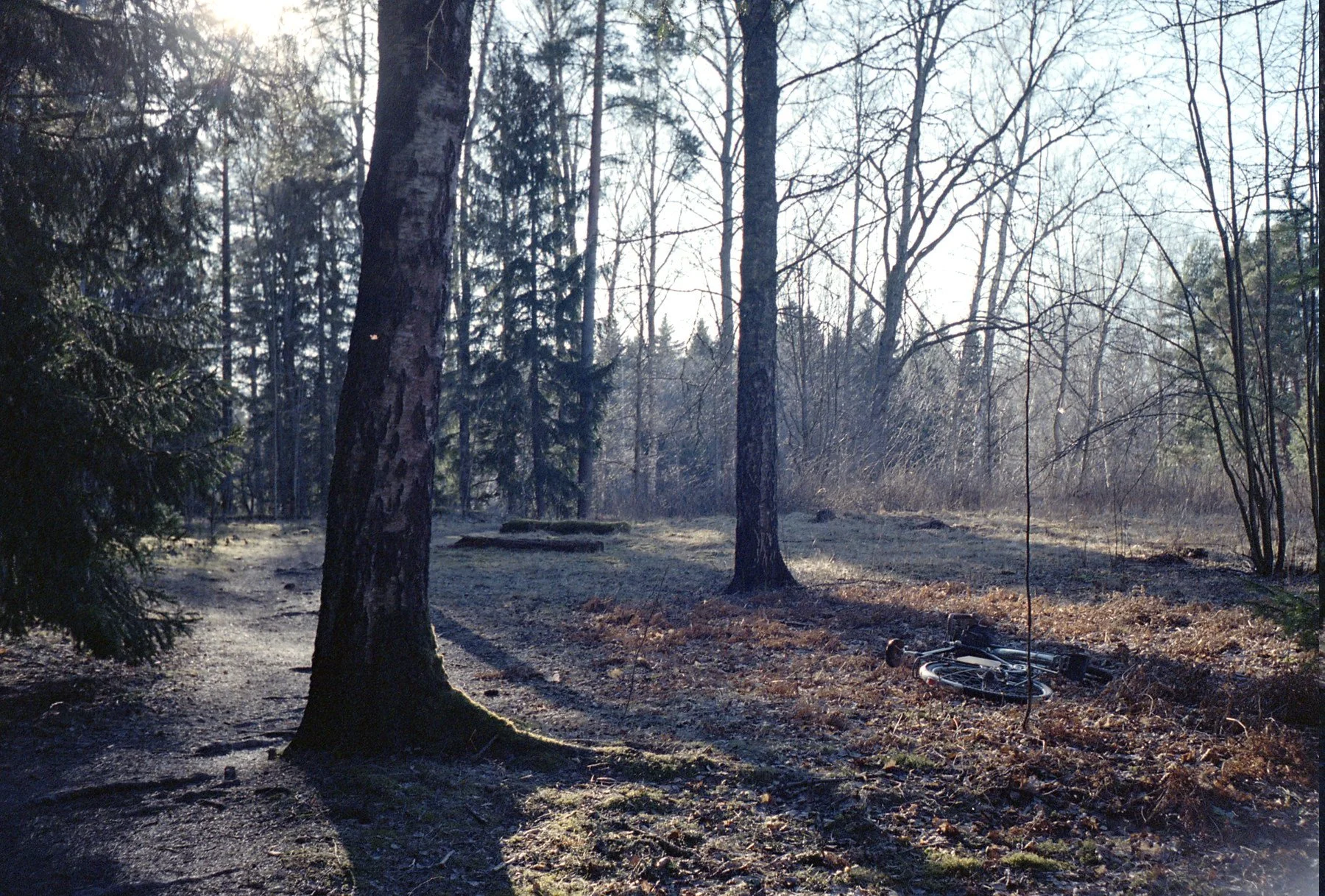
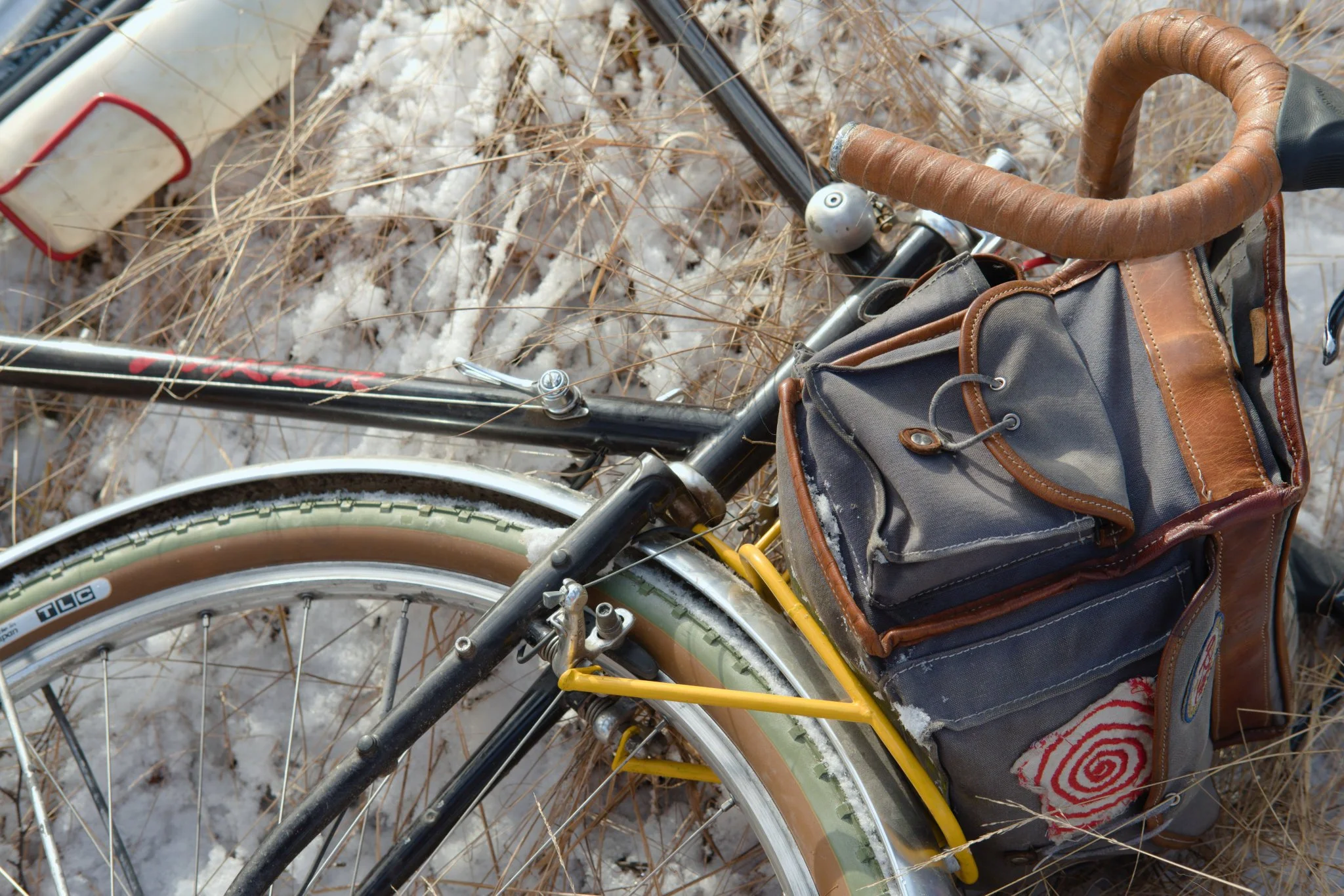
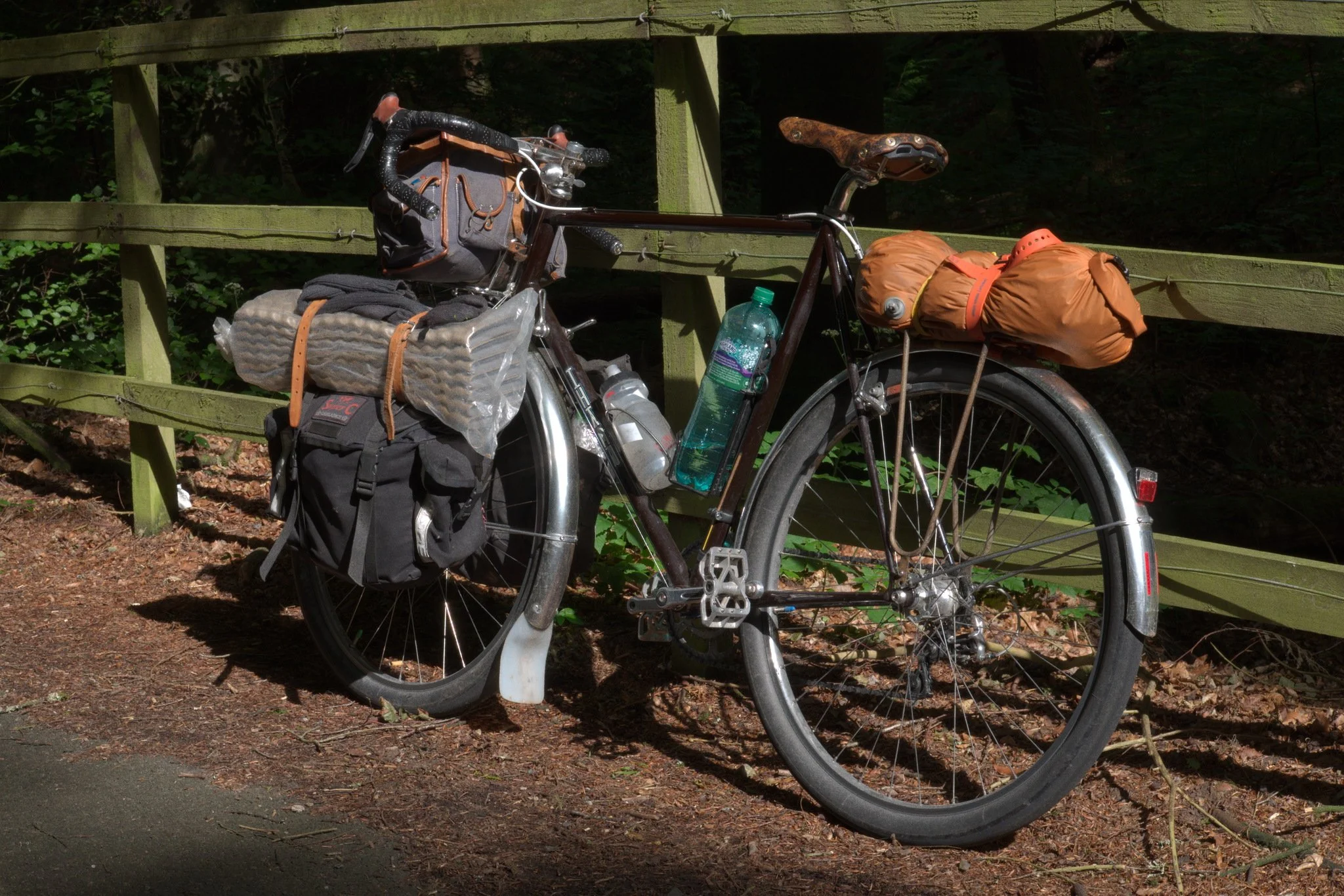
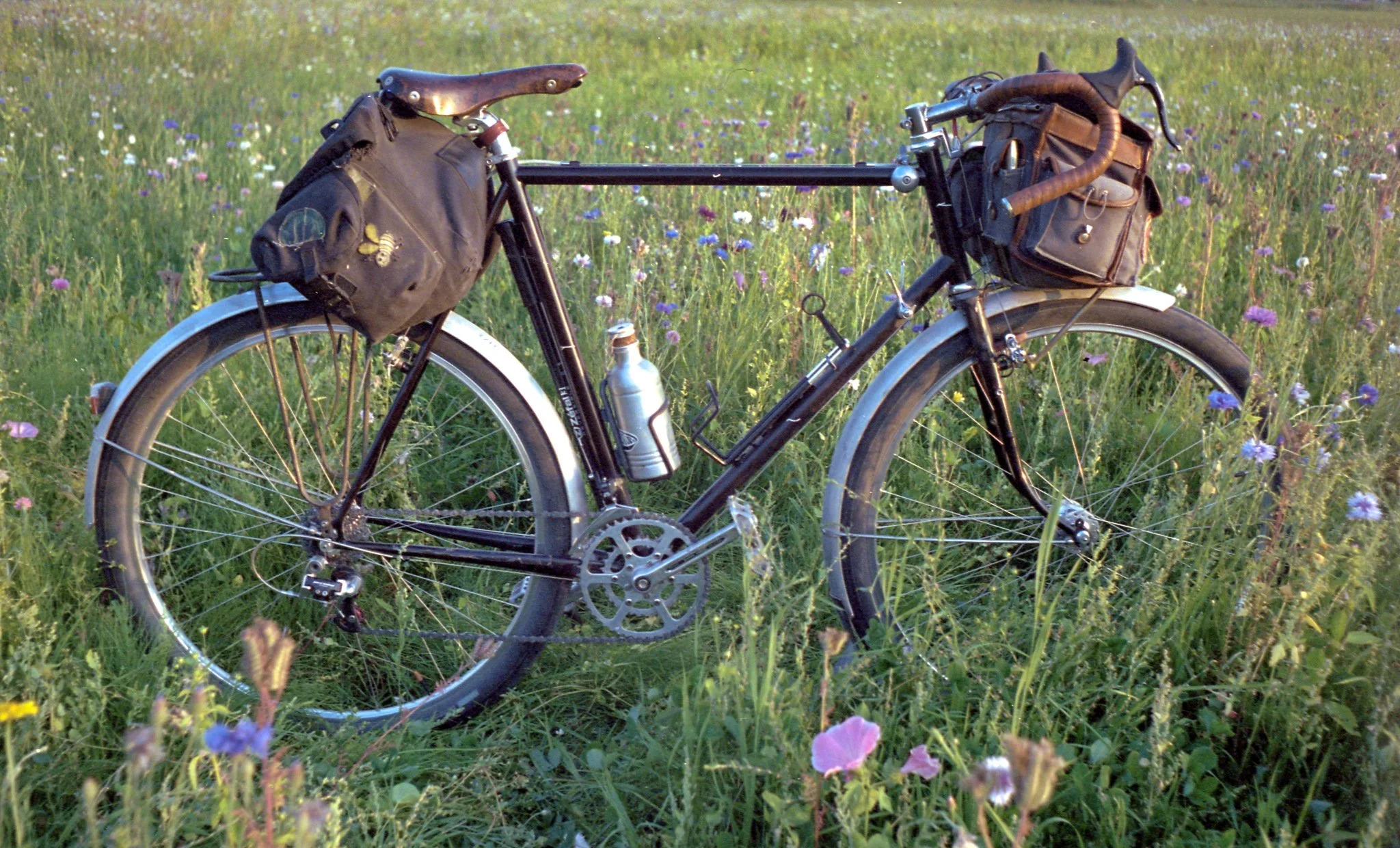
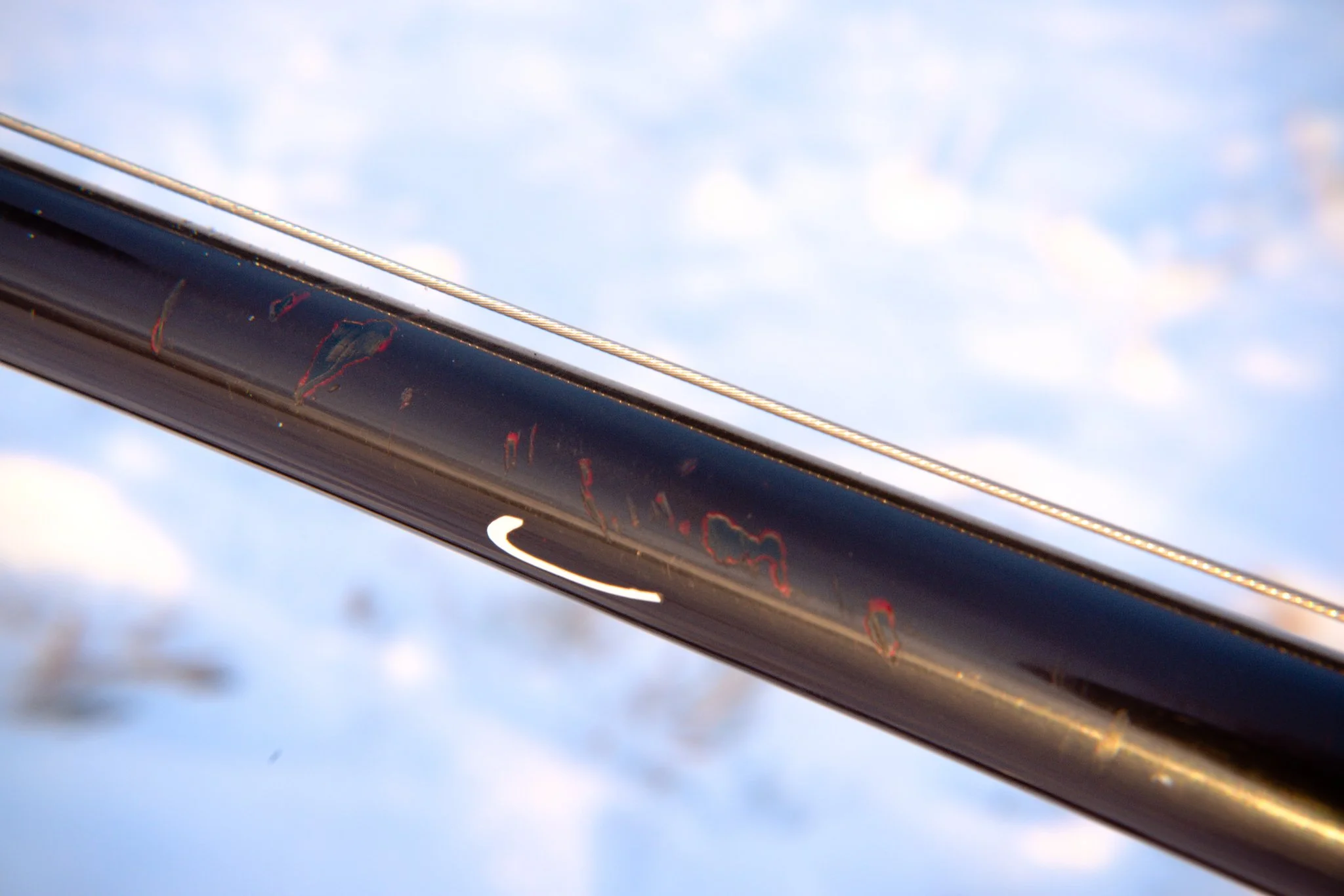
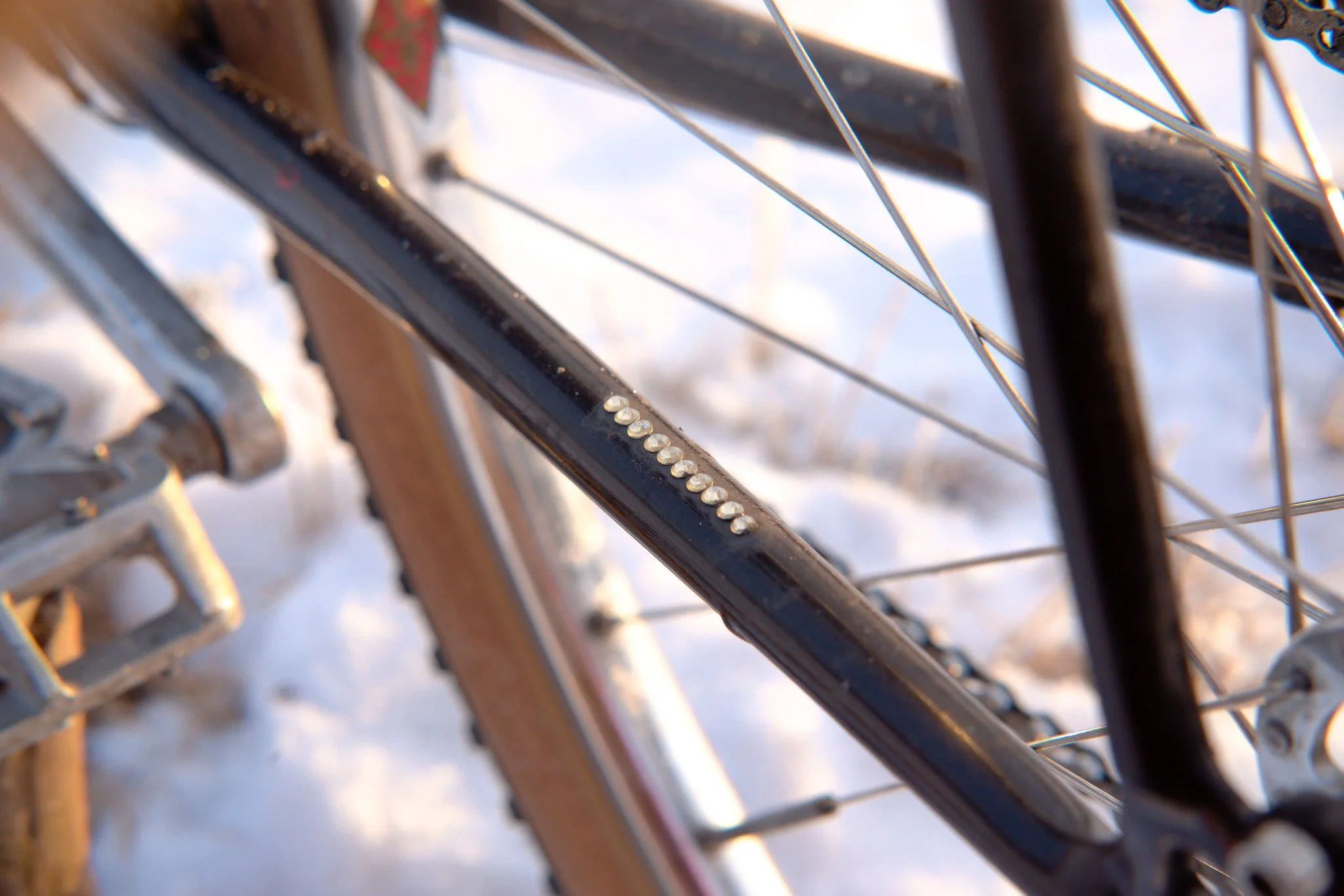
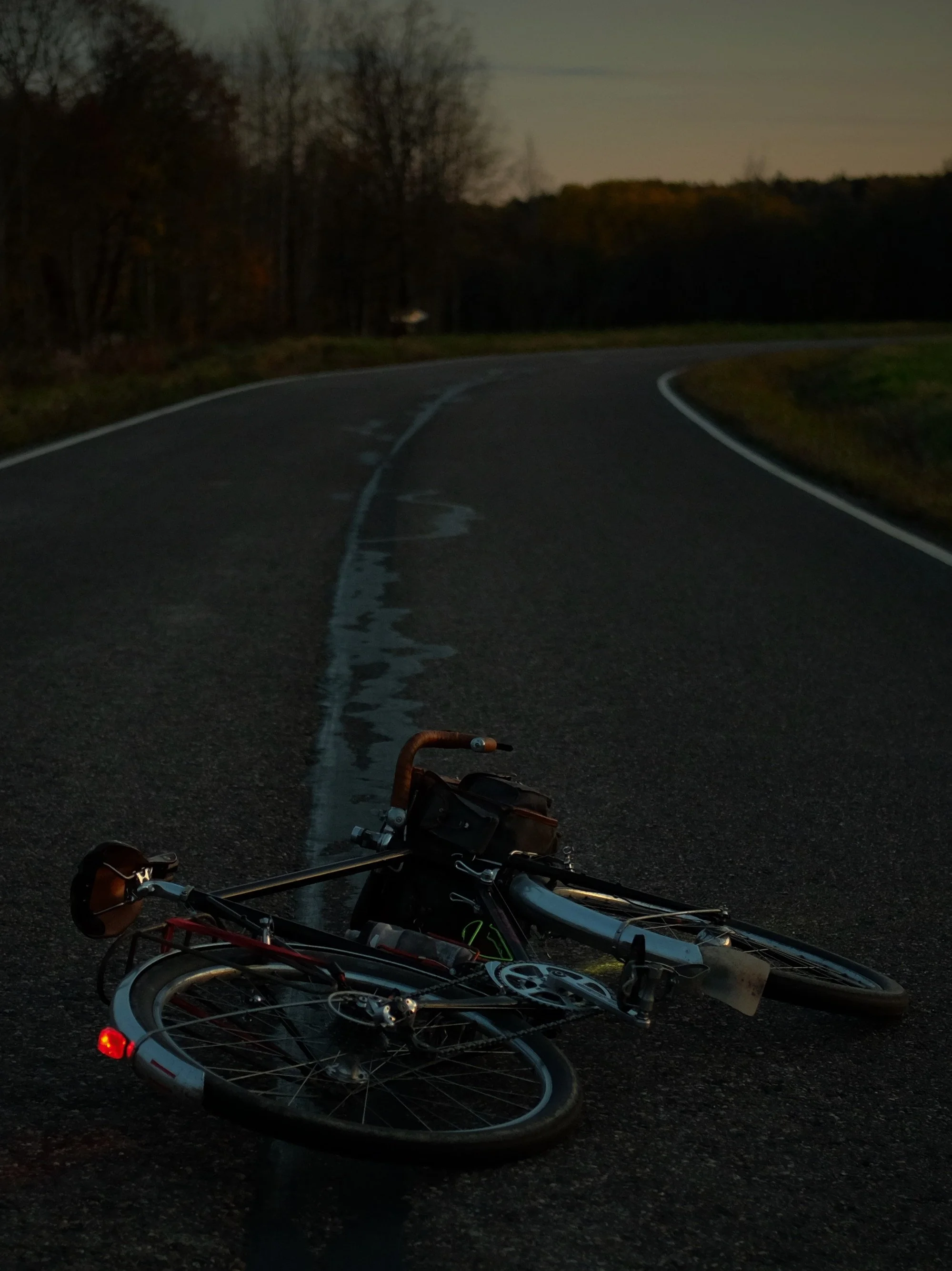
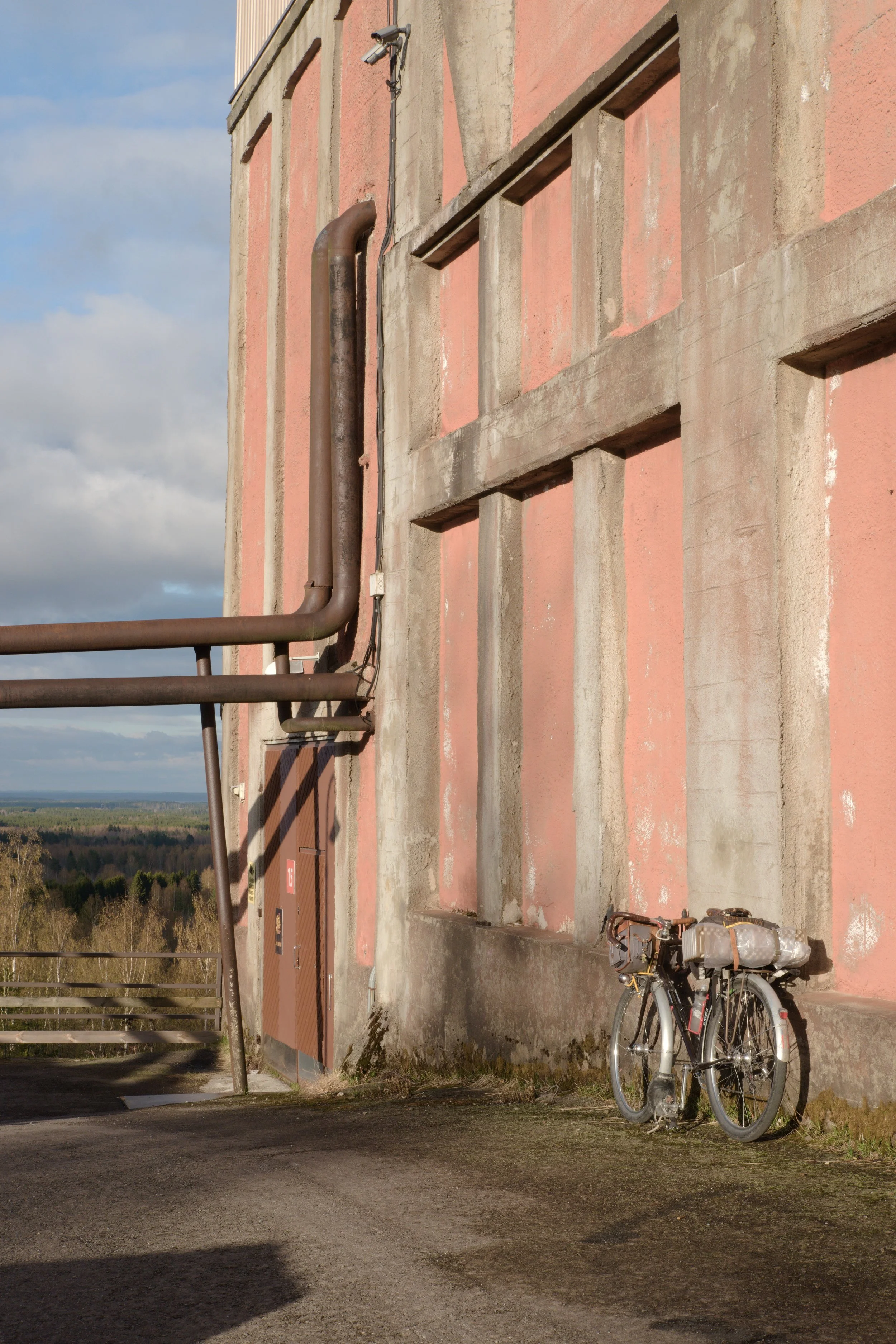
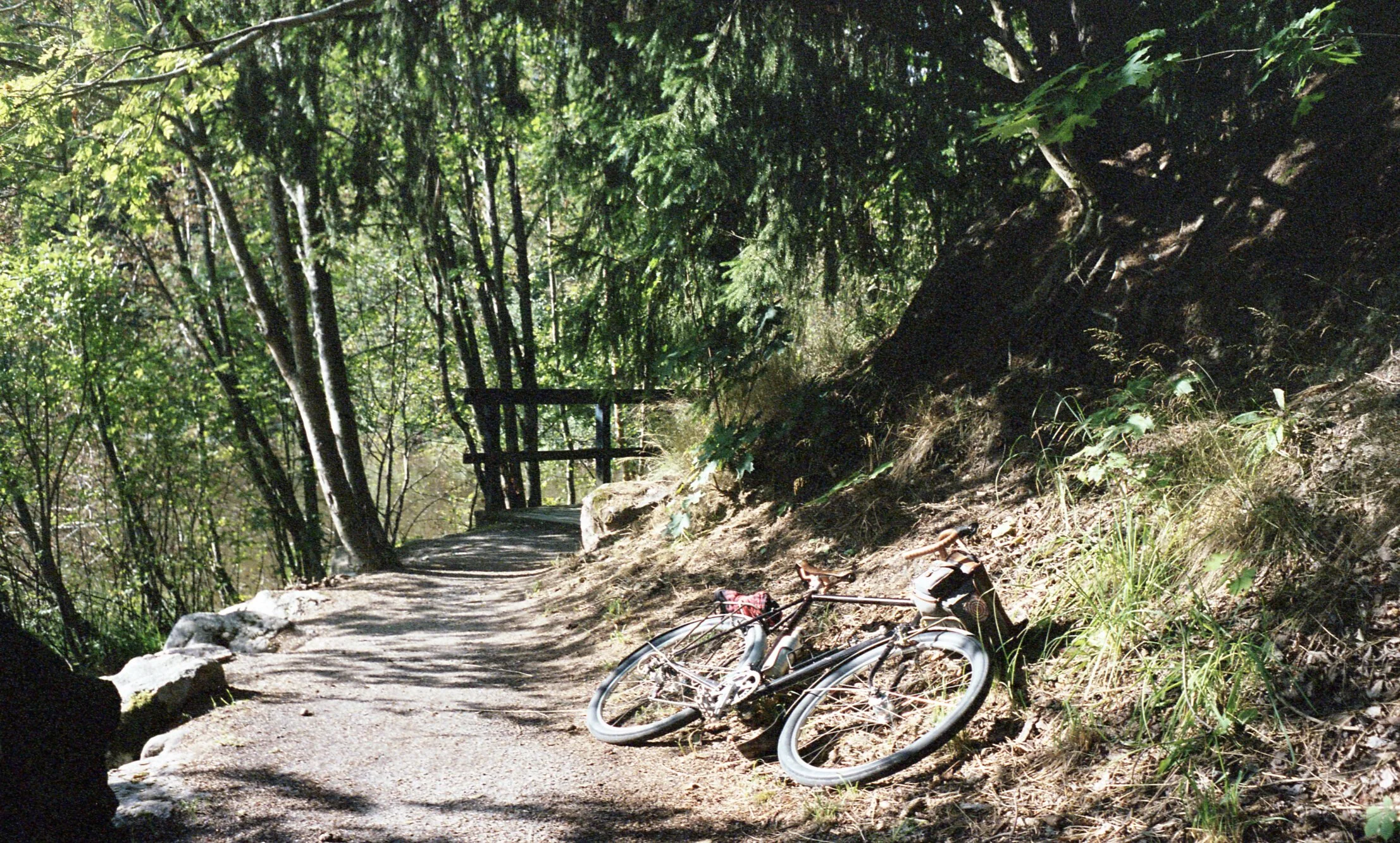
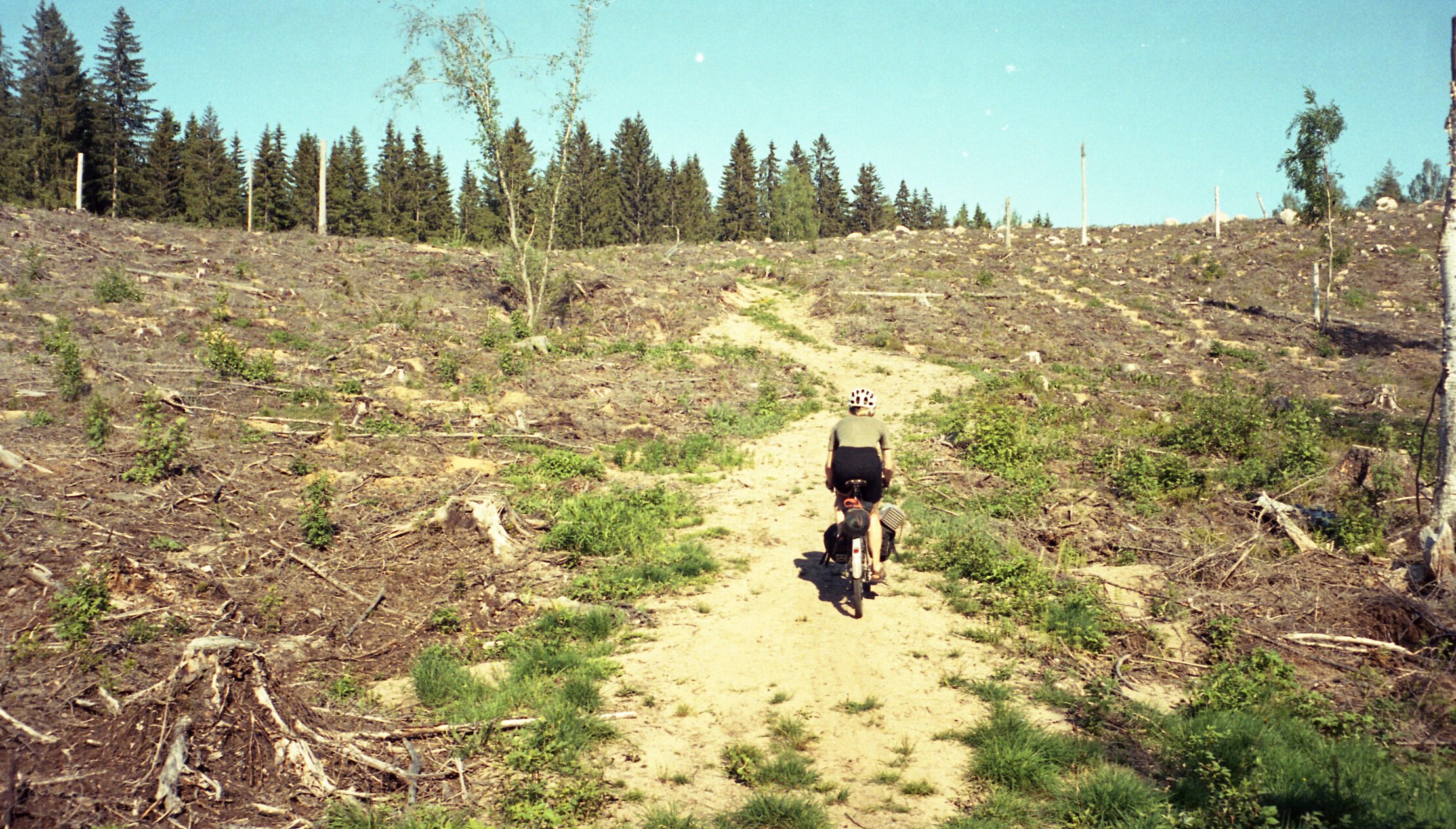
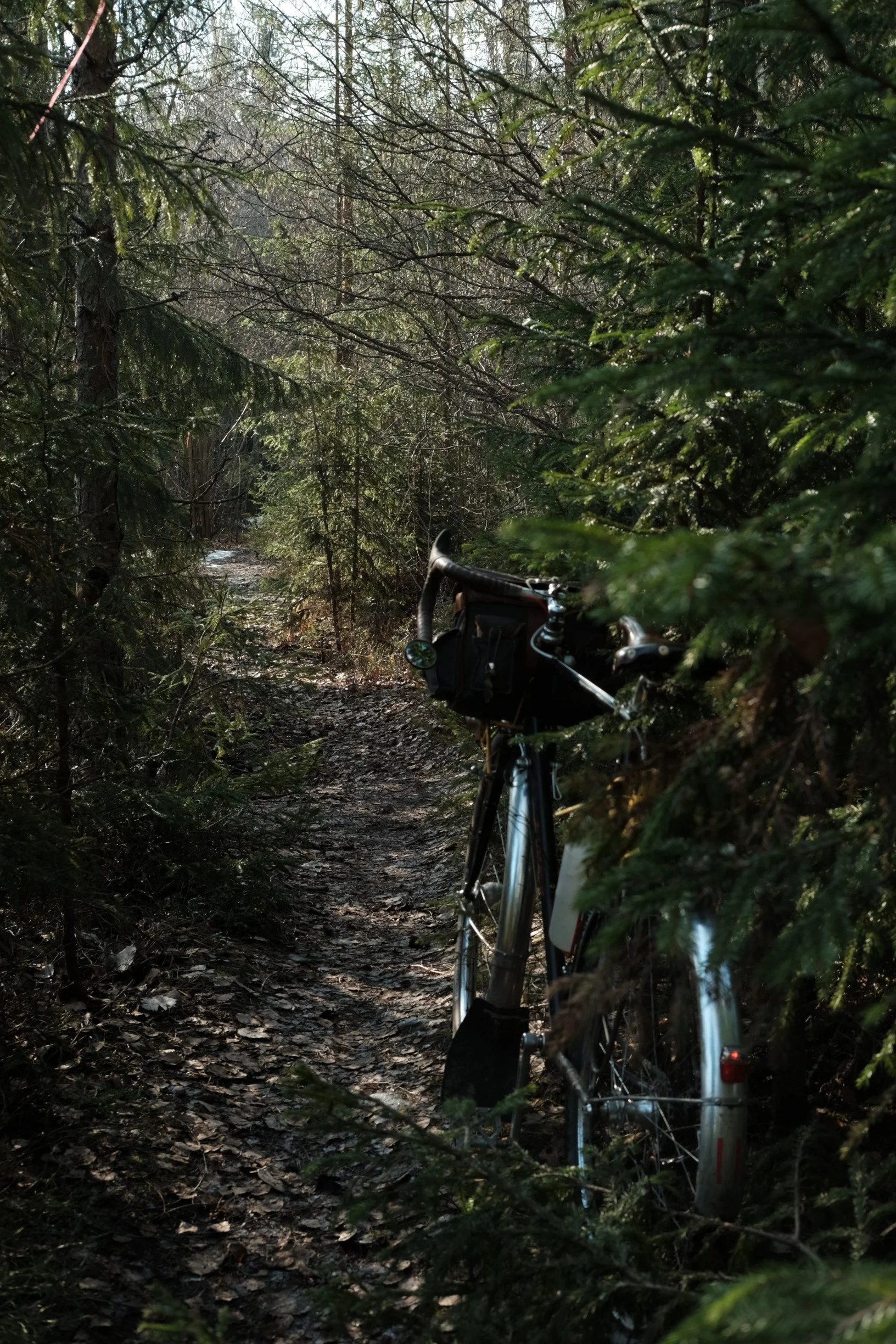
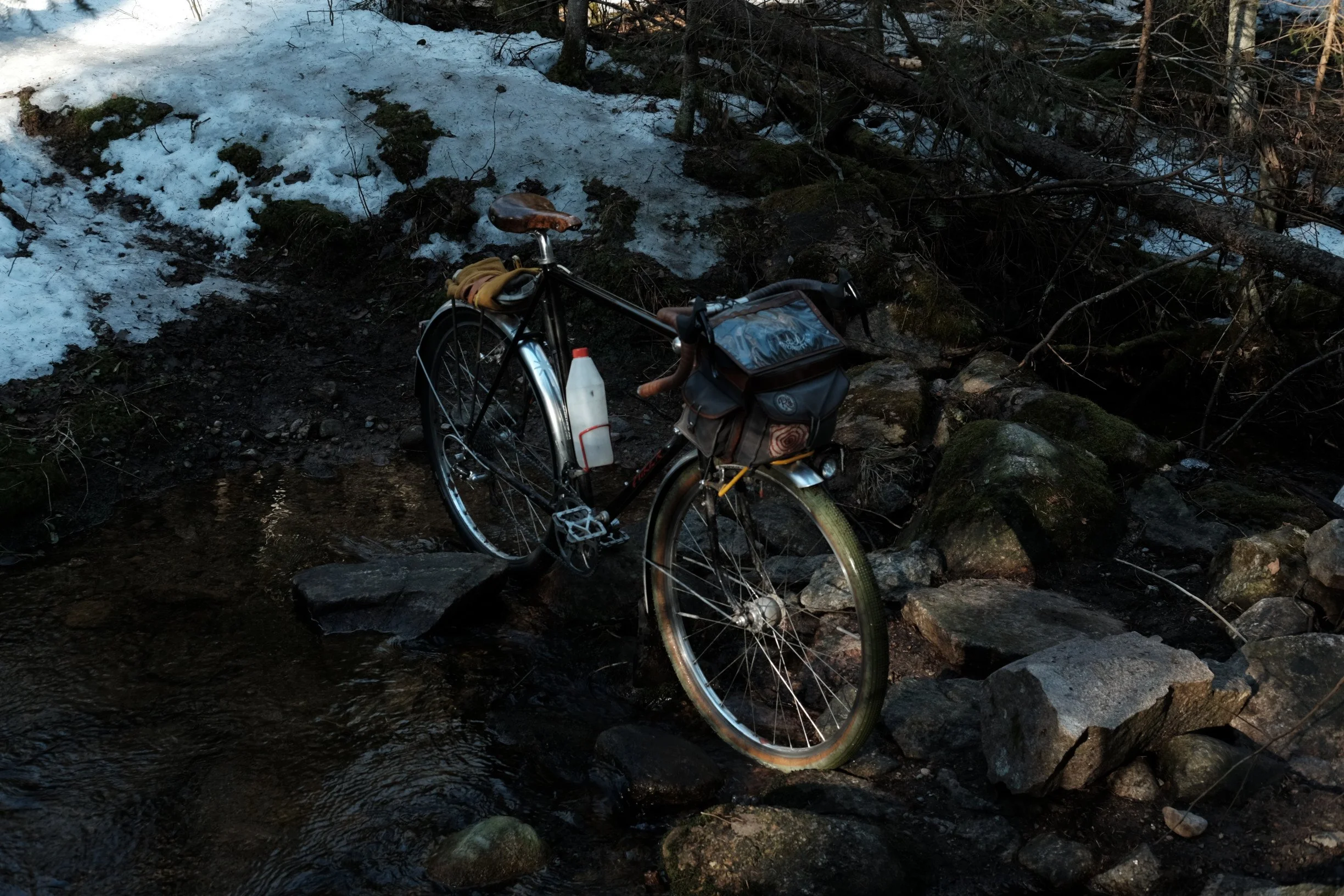
The picture gallery tells another side of the story, of all the places we have been. In case you are wondering why the decals say Hiker on the older pictures, you can read the old newsletters to find out all about that.
Let me then present the technical solutions, components and accessories I have used as that was the main impetus for this article. Heavy bike nerdery is present throughout the rest of the text, be warned. If you just want to know about the vibes, skip to the last chapter.
Shifting
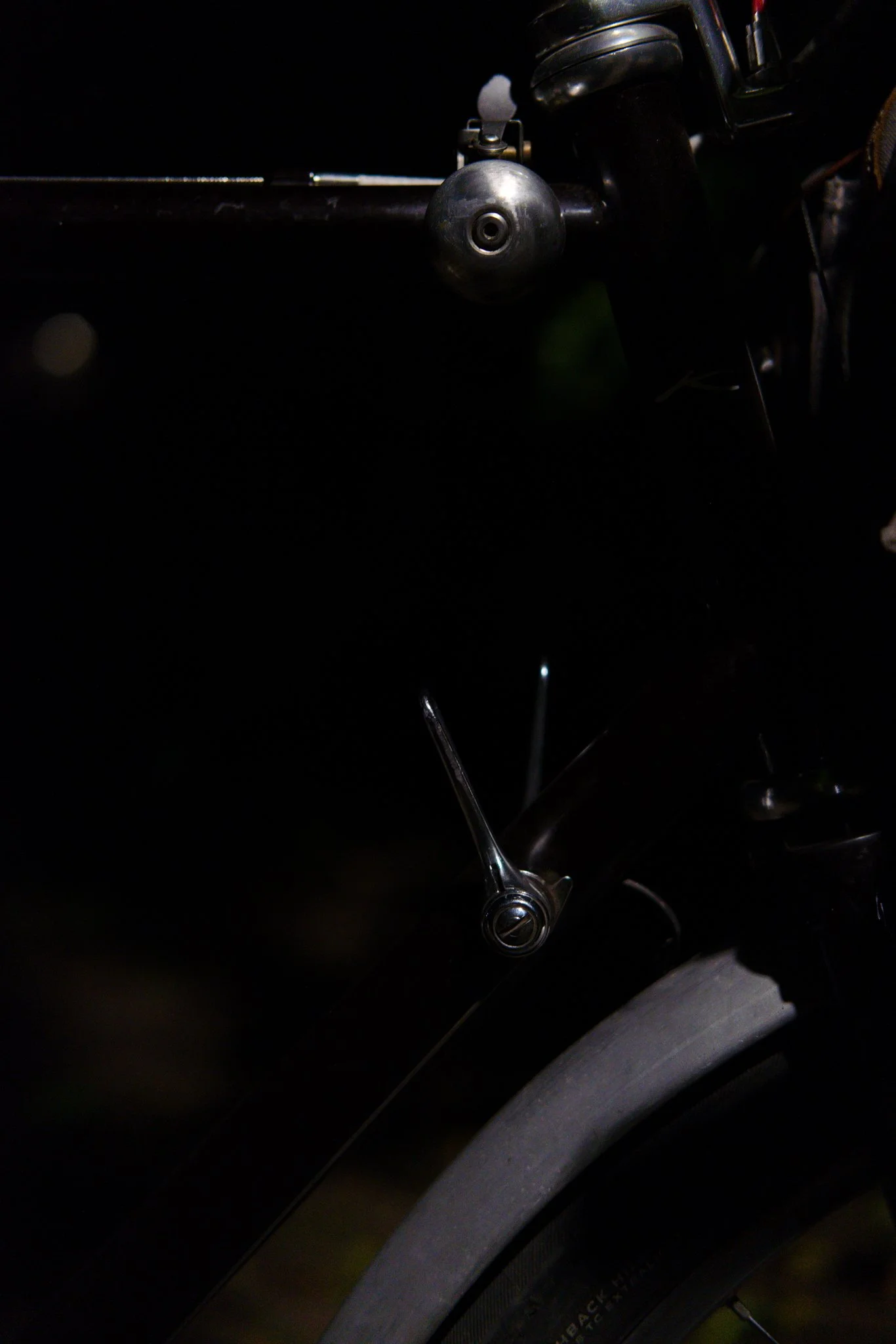
I like down tube friction shifters for simplicity, robustness and the feeling of agency both in shifting and upkeep of the shifting system. I am in total control and carry total responsibility. But modern parts, designed and made in the indexed-shifting era (90s and later), are not optimized for friction shifting, and the general theory of being able to mix and match the shifter with any combination of derailer isn't really true. It will work but it might not necessarily work well or feel good.
So it took some figuring out to get a friction shifting system I was happy with. I'm a little spoiled with the desmodromic action of Myyrä's double cable Cyclo, which shifts very positively with a light touch, when it is adequately oiled that is! (the exposed mechanism dries out and develops rust in wet weather). There is almost never a need to fine-tune the shifter position like with most friction setups, due to the large margin of error of the shifter movement and the self-centering mechanism of the derailer. With many derailer/shifter combinations the pull ratios are such that a miniscule movement at the shifter will move the derailleur by a large amount, and shifting requires superhuman precision. Modern derailleur and cassette systems also don’t give much feedback when the chain is not properly engaged, but just tend to ghost-shift instead. They are designed for indexed shifting after all.
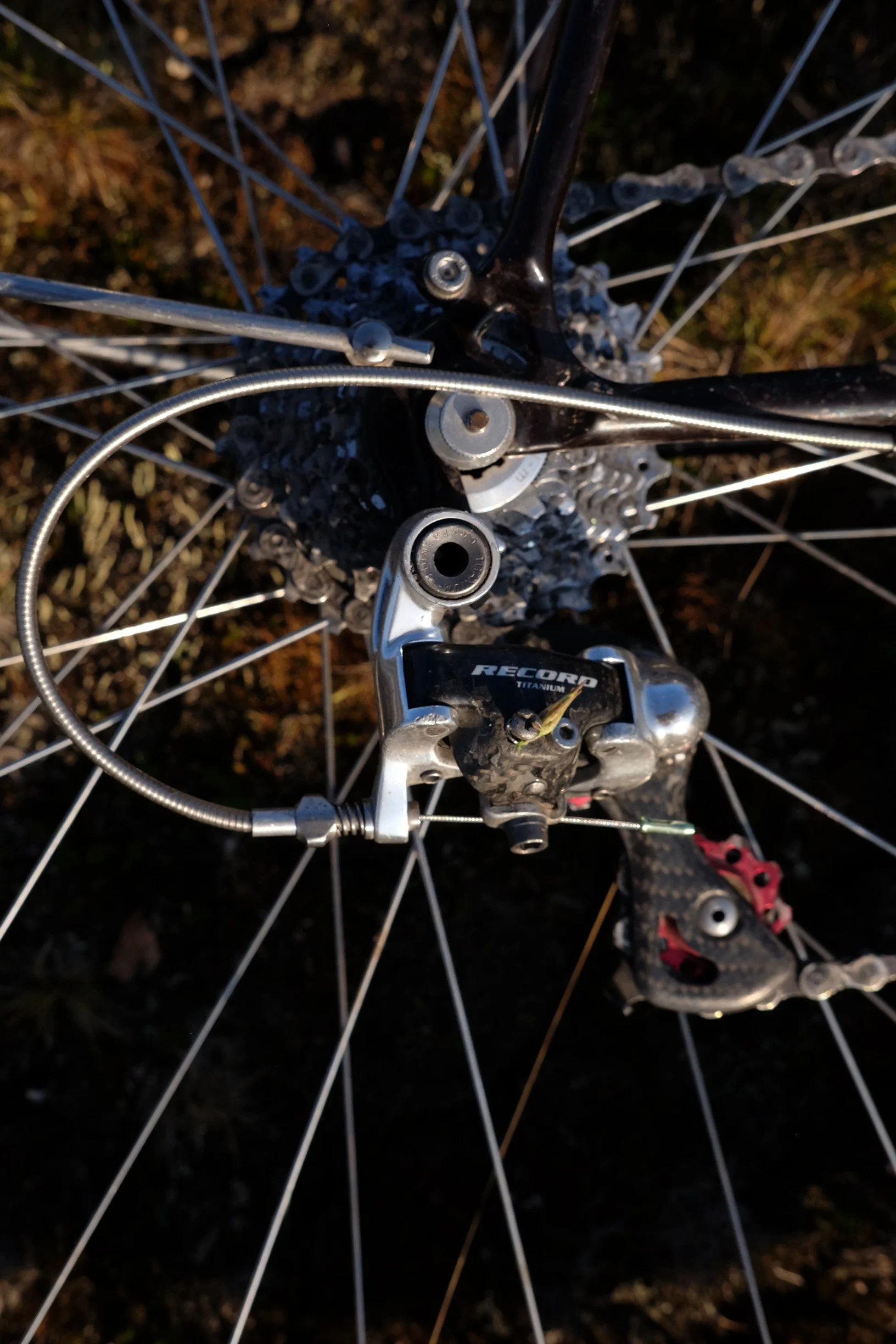
I realized I needed to try and match the shifter movement range of the Cyclo, where 4 speeds in the derailleur are spread over almost 180 degrees of shifter movement. That gives you plenty of room for error before mis-shifts happen. After researching shifter and derailleur pull-ratios, I decided to pair some Simplex SLJ retrofriction levers with a 10 speed Campagnolo Record derailer. As the Simplex-levers have a small barrel diameter for the cable, they pull less cable with the same movement, when compared to old Suntour shifters for example. And I found out that Campagnolo derailers also have such cable pull ratios that they move less with the same movement, than for example a vintage Huret derailer I tried.
Pairing these two systems, my shifter movement is about 180 degrees across the 8 speed cassette that I'm using. (Of which the smallest 12 tooth cog is actually limited out due to fender eyebolt clearance issues, and being too high for my needs anyway) So basically I'm running a 2x7 speed. For me that is plenty, as I'm used to having a 2x4 speed on Myyrä. The short and stiff Campagnolo racing derailer also has very good feel and feedback when shifting.
Brakes
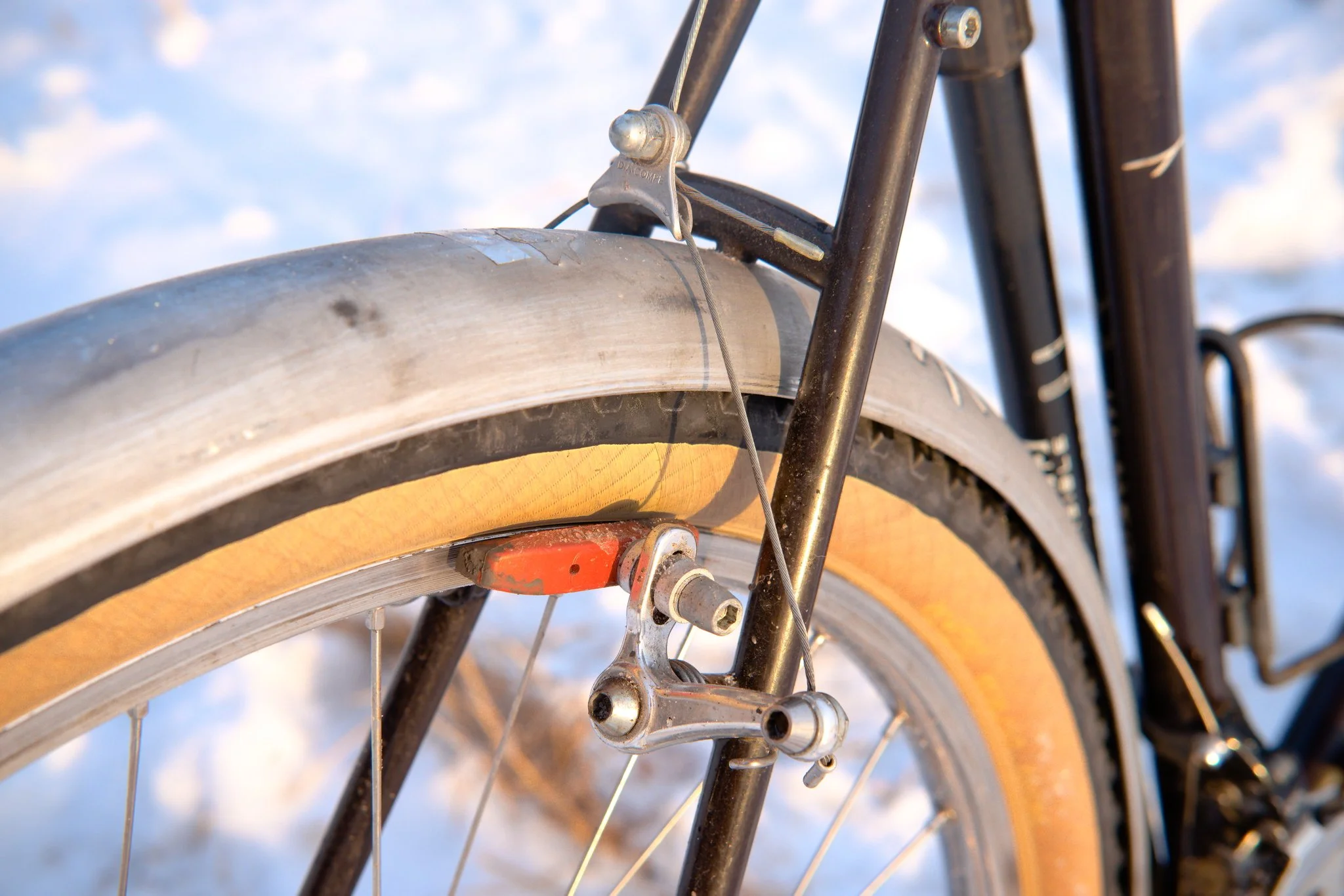
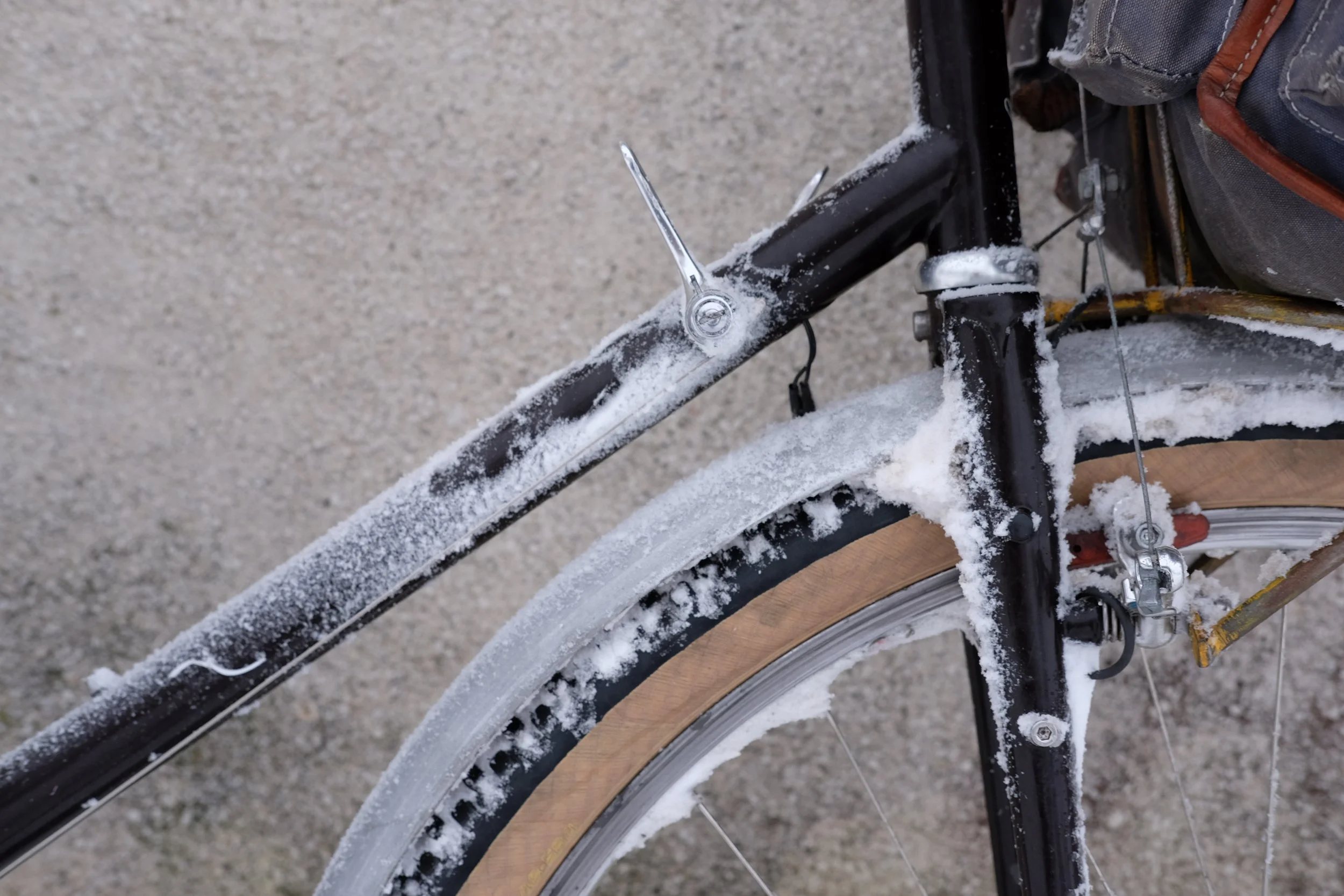
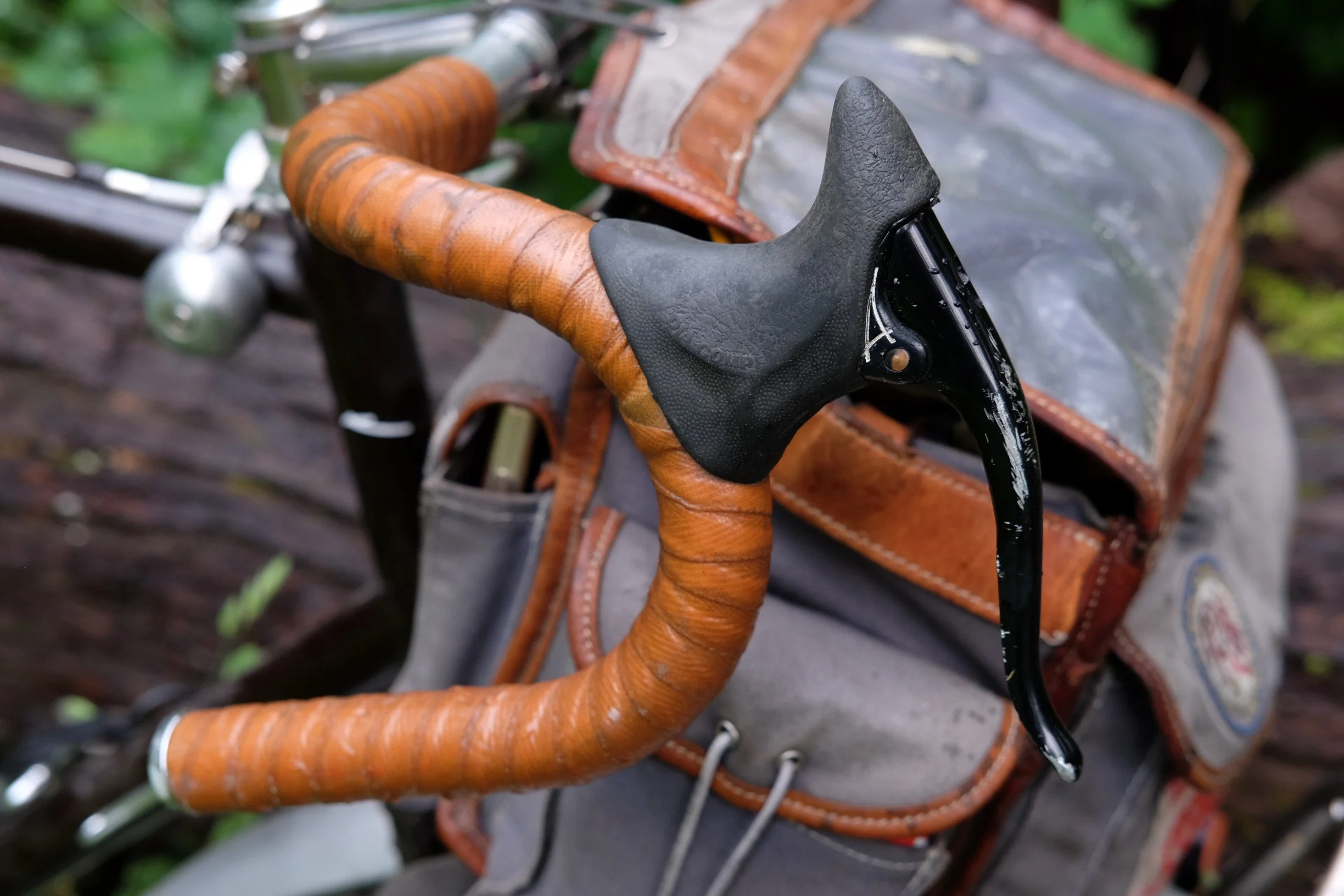
First I installed some random vintage canti brakes I had lying around, but ended up replacing them with the Dia-Compe DC980 brakes as they are a bit lighter, and also so my bike would use the same type of brake pads as my partners touring bike, which makes packing for long tours a bit more simple. The DC980s work well, like almost any canti brake when set up properly. Later I will maybe write a kilometer long article on how cantis should be set up properly, but not now. The brake levers are vintage Dia-compes. I wanted to try some fully black levers for a change, and these have a cool shape that stands out a bit from most levers. And for whatever reason they have my initial "A" painted in white on them!
The straddle cable set up low, with salmon Kool Stop pads, good condition cables and clean rims result in very good power and modulation. Even mountain descents in the rain, loaded with camping gear, feel safe and controlled. I am a lightweight person though, your braking distance might vary.
Wheelset
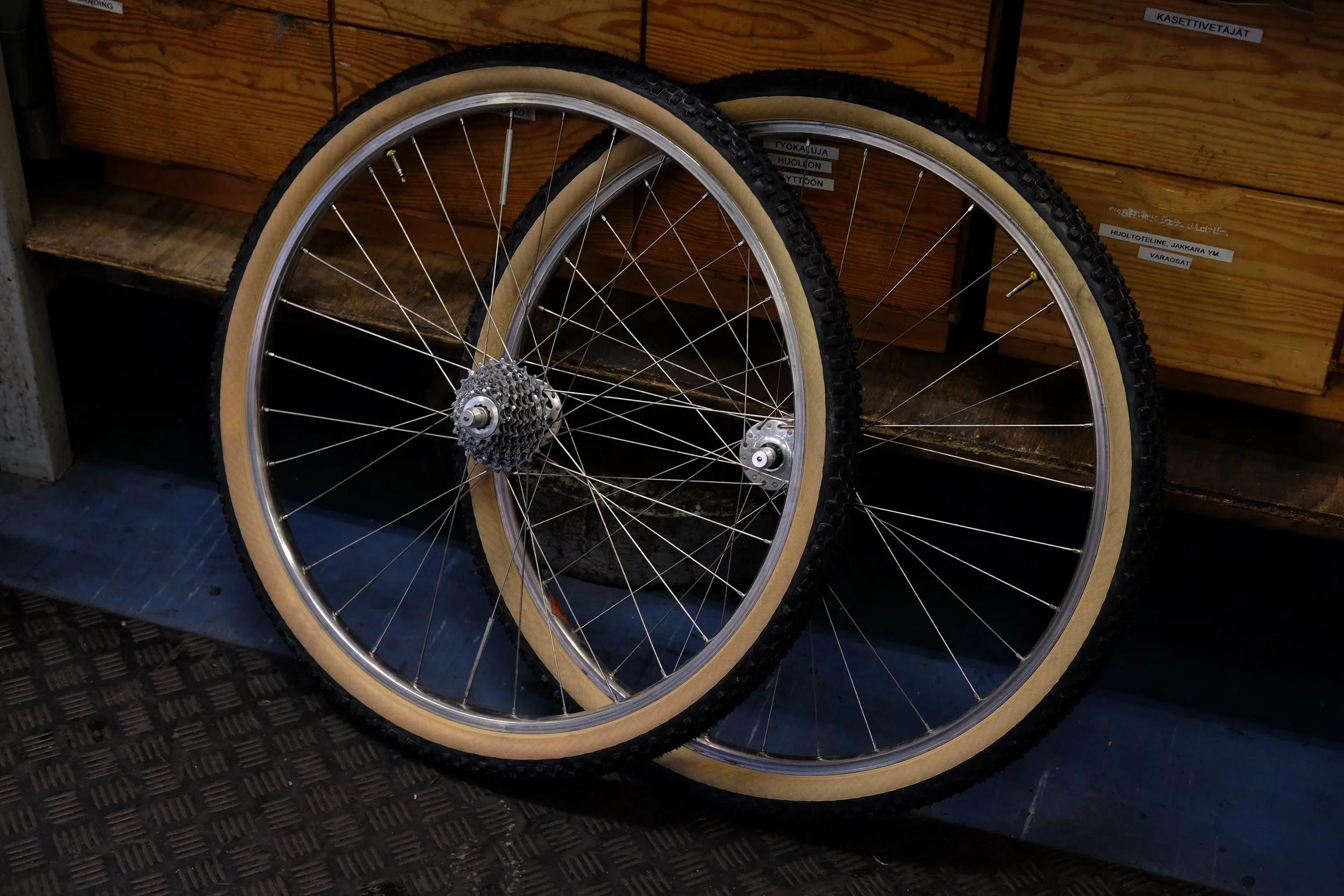
The wheels are built by me, with Pacenti Brevet rims, 32 holes paired with a Halo rear hub and a SON 28 hub dynamo on the front for maximum lighting even at slower speeds. The Halo hub has an overly long 11 speed compatible freehub which I don't like, as it just makes the spoke bracing angle and tension distribution worse. I'm running 7/8 speed anyhow. An older, shorter 8-10 speed (or even a yet shorter 7-speed) freehub would be better for wheel strength, but I didn't have a nice one at hand when building the wheels. For my meager weight the rear has held up fine though. But only the fact of knowing of any suboptimal construction on my bike does bother me!
For the spokes I used 2,0mm/1,5mm butted Revolution spokes for the front, and for the rear I built the drive side with the bit thicker 2/1,8mm Competitions and the non-drive side with the Revolutions, as suggested by such authorities as Gerd Schraner.
The Pacenti rims are very nice indeed, but after they are worn out and once the more economical Tunk/Alexrims ones arrive I will probably use those. In year-round riding in wet and slushy Finland (and doing rainy tours in Scotland and Norway), I’ve replaced the Brevet rims around every 10-15,000kms, once the braking surface has worn down to around 0,8mm. If riding in mostly dry weather I would expect them to last at least 2-3 times as much.
Cranks and Gearing
As for the gearing, in the back I have a 8 speed 12-26 SunRace cassette, with the 12-tooth sprocket limited out like said earlier, due to fender eye bolt clearance that I haven’t bothered to fix in any other way. So in reality it is a 13-26, 7-speed cassette.
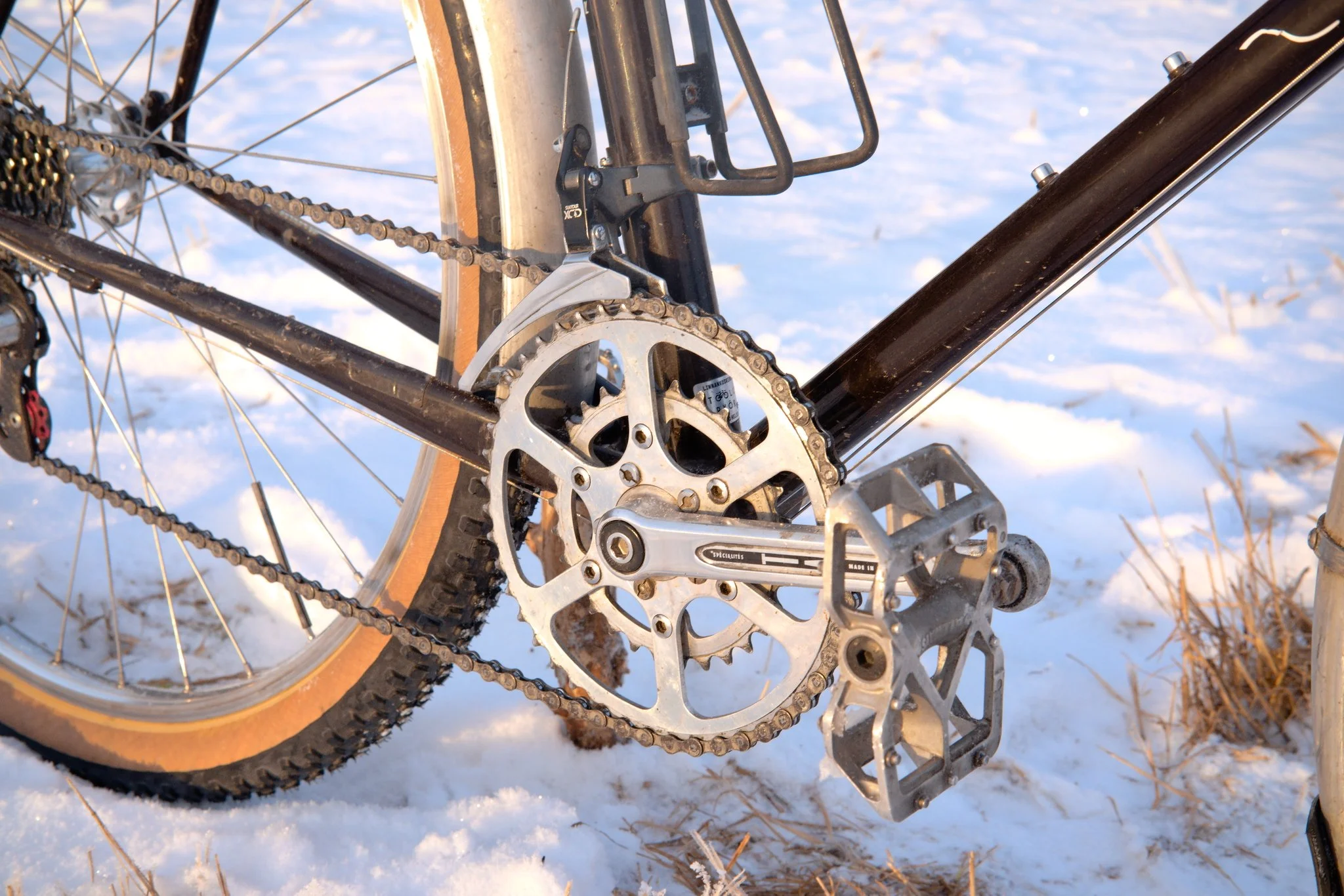
The TA Specialites "Cyclotouriste" cranks are mounted with 46-30 chainrings. Most bike people I know tend to run very low gears and many say that my low gear of 30-26 is too high for their taste. I think it's largely a matter of what you're used to, in reasonable limits. I don't find it too bothersome grinding up mountainsides on this gear ratio even when loaded up with camping gear. Your legs get used to it and get stronger! And of course one can also walk in extreme cases. I appreciate the lower weight of the smaller cassette (and derailleur), but even more the quicker and more precise shifts of a stiff short cage racing derailleur, compared to clunky and slow long cage touring/gravel/mtb derailleurs. I believe it is much easier to optimize a derailleur for a more "tight" cassette, as the range of motion is so much smaller. This makes it shift in a more positive way.
Anyways, people ride on fixed gears too. And I used to do that and mostly I also survived. Compared to that, having these ratios is like heaven is to earth. There's no need to go all the way up to outer space in this case! A front loaded flexible light-ish bike also works well danceuse, that is pedaling standing up, where one uses a larger gear. I guess some consider this bad form, but I consider it normal. Of course on a tired moment going up some Norwegian mountain carrying tons of food and gear you might regret not having lower gears. But that's only like 1% of the time. Mostly I'm just gliding along on some rolling southern Finnish terrain with a moderate amount of gear. It would be easy to fit a larger cassette with a different derailer and if we go mountain camping again I might just do that.
The TA cranks themselves should be famous enough to not need an introduction, but I'm afraid that fame might be out of proportion in my own little world! They are super light, very low Q-factor, for a narrow pedaling stance that I like, they have almost unlimited gearing possibilities starting from 24-tooth small rings, they can be found for cheap on french eBay (like 70eu for a full set) and they work well with standard square taper bottom brackets.
And I really like their look, as they stand out from the basic 5-arm spider setup. I have to admit to sometimes favouring things just because they are different from what everyone else is doing... I'm not sure if that is healthy or not. But I like them in the way I like pre-suntour-paralellogram derailleurs. After those came out and when the patent on the slanted paralellogram ran out, all derailers have looked mostly the same ever since. Before that, there seemed to be more aesthetic variety. I recommend surfing on the Disraeli Gears site (link) and marveling at the world of options.
The cranks being very narrow and the crank arms completely straight, they can be tricky to set up with a front derailer. You need to have a well fitting, flat shaped derailer that is able to go very close to the seat-tube. The front derailleur I have is a vintage Suntour XCD 6000. The cage shape is very good for what used to be a smaller-than-standard big ring. I also like how the black/silver color matches the black carbon & polished aluminum on the Record rear derailleur.
The chainrings for the special 50,4bcd standard are made by TA Specialites themselves. But they don't make any versions with shifting ramps, which makes good front derailleur setup even more critical, and one even has to accept some amount of slowness in front shifting compared to super-optimized modern front chainrings and derailleurs. But there's sides to everything, the non-ramped chainrings are probably cheaper as they are more simple, and they can be rotated to any position, which makes them wear more evenly.
And of course, the chainrings are only compatible with 8 speed width chains, meaning no modern groupsets. Which for me is irrelevant. (Though nowadays Velo Orange produces 9-10 speed chainrings for 50,4BCD)
I don't quite remember which brand of ~118mm square taper bottom bracket I ended up using from the bb-shelf of Töölön Pyörä. The basic and mid-price ones are mostly all the same with average seals and cheap prices, except for the Shimano UN300, which is worse than anything else out there, probably due to the smaller size cartridge bearing used.
A nicer more properly sealed bb like a vintage Shimano Un5x or 7x or 9x or then a new SKF unit would be better in the long run, but I just used what was easiest to get at the time. The axle length is perfect for a low q-factor of around 140mm with the TA crankset. Do note that this is matching a new "JIS" taper axle to old french cranks. It works, but you cannot really reverse and use an old “correct” Stronglight axle with the same cranks at a later time anymore.
Waxed chain
I've been running an immersion/hot waxed chain for a year or so and I’m starting to be quite sold on the concept. Some years before I didn't care that much if my drivetrain was dirty, but after I started caring about it, mostly for the sake of mechanical sympathy I began to feel towards the metal parts, the time spent on cleaning them started to be considerable. I do live in Helsinki where the winter is especially cruel for exposed metal parts that are supposed to be lubricated at all times.
For me, who works at a bike shop and has easy access to everyhing needed, hot waxing seems to be quite a bit more efficent in keeping everything clean. I've just been using basic YBN and KMC chains, rotating 3 chains on the bike. I've gotten around 500-700 dry kilometers or 300-400 more wet kilometers so far on average before re-waxing. Those are completely silent and smooth kms, I could have ridden more but once I start feeling any noticeable resistance in the chain, I have considered it time for re-waxing. I haven't cleaned my chainrings or cogs almost at all in the last 5000(?) kilometers and they look very good with minimal dirt.
Combined with Rene Herse extralight tires, the smooth drivetrain and supple tires make the bike go very effortlessly and silently.
Pedals
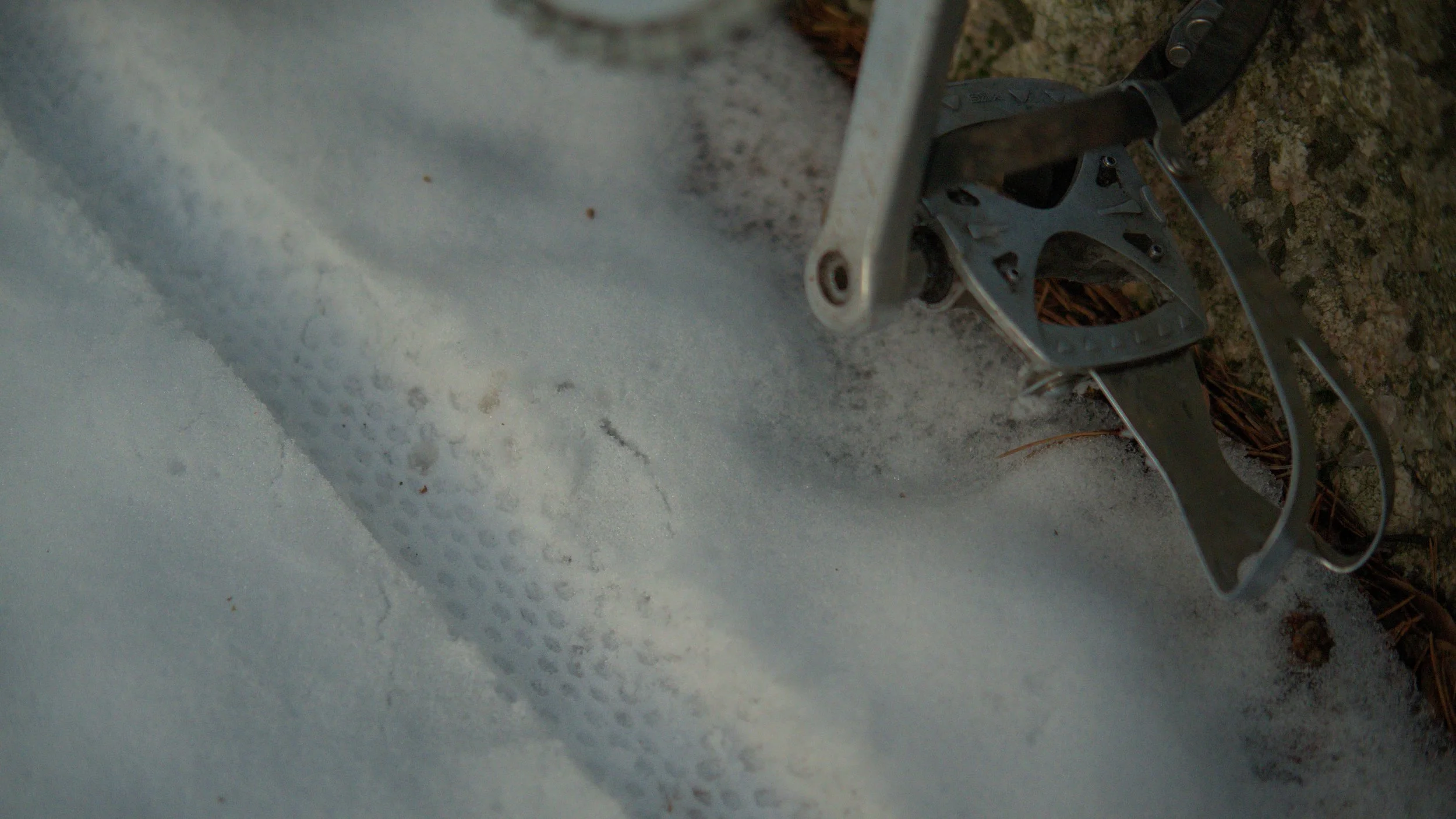
Depending on the mood and season, I’ve been switching between toe-clips and straps, flat pedals, and SPD clip-in pedals. For too many reasons to unfold here, MKS GR10s with clips and straps have been my favorite and most used pedals. I’ve done most of my biggest tours and longest single day rides with them. For the winter, I swap to flat pedals, as it is much easier to balance and when needed to bail out, when riding on snow and ice, both of which we have plenty here.
Fenders and tires
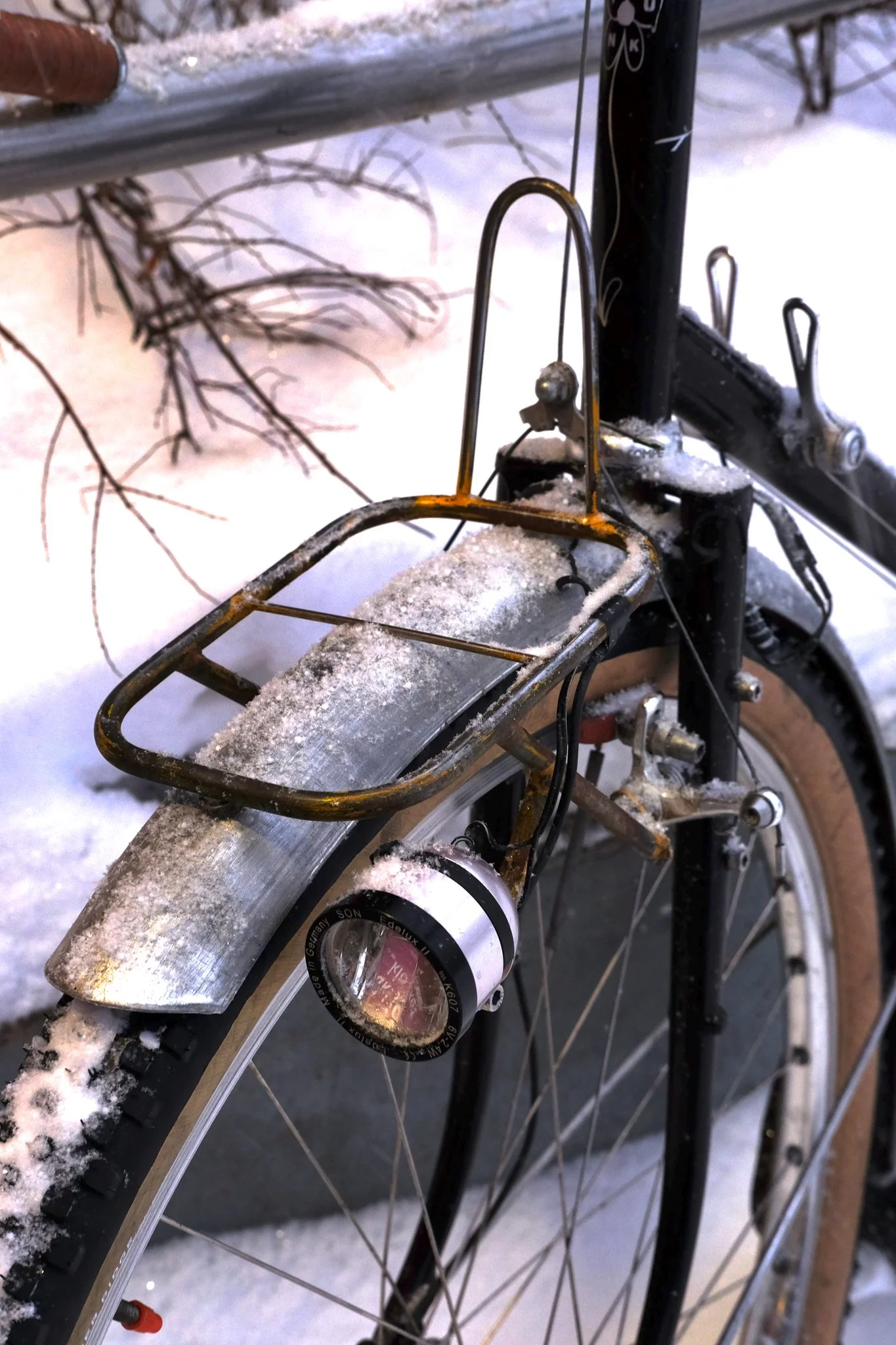
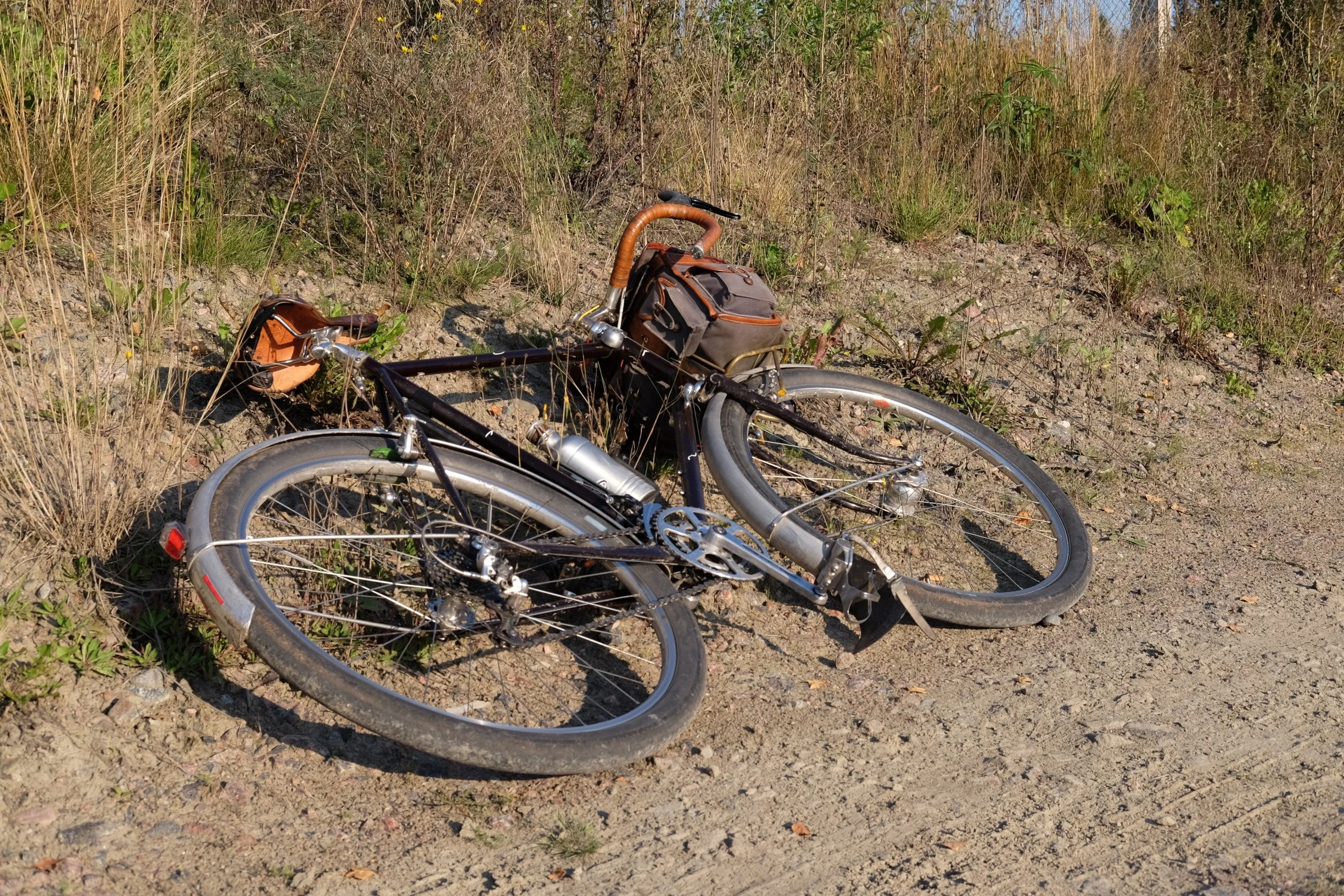
The fenders are somewhat standard Pelago aluminum ones, meant for 622 wheels but which I squished and re-radiused to fit 584 tires. Their thus flattened width of ~58mm is a bit undersized for the 48mm tires but they work well enough that I haven't bothered to change them. I've used the Gilles Berthoud aluminum fender stays instead of the original heavy steel ones. I also really prefer eyebolts instead of clamps to mount the fenders on the frame. It just seems like a much more secure connection as the stay passes through the center of the mounting point, not offset from it. It also looks cleaner and less contraption-like. Using eyebolts does mean having to drill out the threads on the eyelets, and one can run into clearance issues on the rear like mentioned earlier. But for me it's all worth it.
At some point I wanted to try a matte vintage aluminum look and scrubbed them with steel wool and drain opener, it turned out okay. Oh, and not to forget the front mudflap, very important. I’ve set up mine very close to the ground, with only a few centimeters of clearance.
Originally I planned on mostly using 42mm tires. But my rides include such a lot of gravel and rough stuff that 48s work possibly a bit better. More importantly I like the balloon-tire look! It looks less serious and more fun. I’ve been switching between tires with butyl tubes, TPU tubes and tubeless. They all work and have their up- and downsides, and I don’t think there is a final winner. The 48mm René Herse extralight tires are simply wonderful, comfortable and fast. They probably puncture more easily than more protected ones would, I’m estimating having a flat about every 2000kms, as streets in Helsinki and roads in Finland have quite a lot of sharp debris on them. Which I consider OK, it is not a big deal for me to fix a flat.
Handlebar and stem
The handlebar is a René Herse ‘Randonneur’ in 42cm width, with the iconic upsweep design that I really like. The silhouette reminds me of butterfly wings and elevates the whole bike to make it look a bit like it's flying. There are no sharp corners or overly straight lines that make a handlebar look dull to me, just beatifully sweeping curves.
The swoopy shape does seem to help with the "corner" hand position to make it fit better. I do a big part of my riding in that position. Probably like 40%. Along with 10% on the "tops", 20% on the "ramps", 10% on the "hoods" and 18% on the "drops" position. The remaining 2% is ridden no-hands, naturally.
The handlebar is 42cm at the drops, center-center. On the ramps/hoods it is 38cm wide. I would like to try an even narrower bar, but my handlebar bag is actually too wide to fit anything narrower, so for now I will just ride what I have, which I don't have any problems with.
The bar-tape is a single layer of Velox cotton tape, beige on one side and dark brown on the other. I was going for the yin/yang bleached punk hair look, which didn't quite work out as planned as I didn't bother to mix a new batch of clear/yellow shellac, but just used some brown/red shellac I had ready. This made the other side darker than I originally had in mind. I still think it looks nice. Shellacked bar tape is probably not the best, but it's totally good enough. The bike is so soft that you dont really need any extra cushioning on the handlebar.
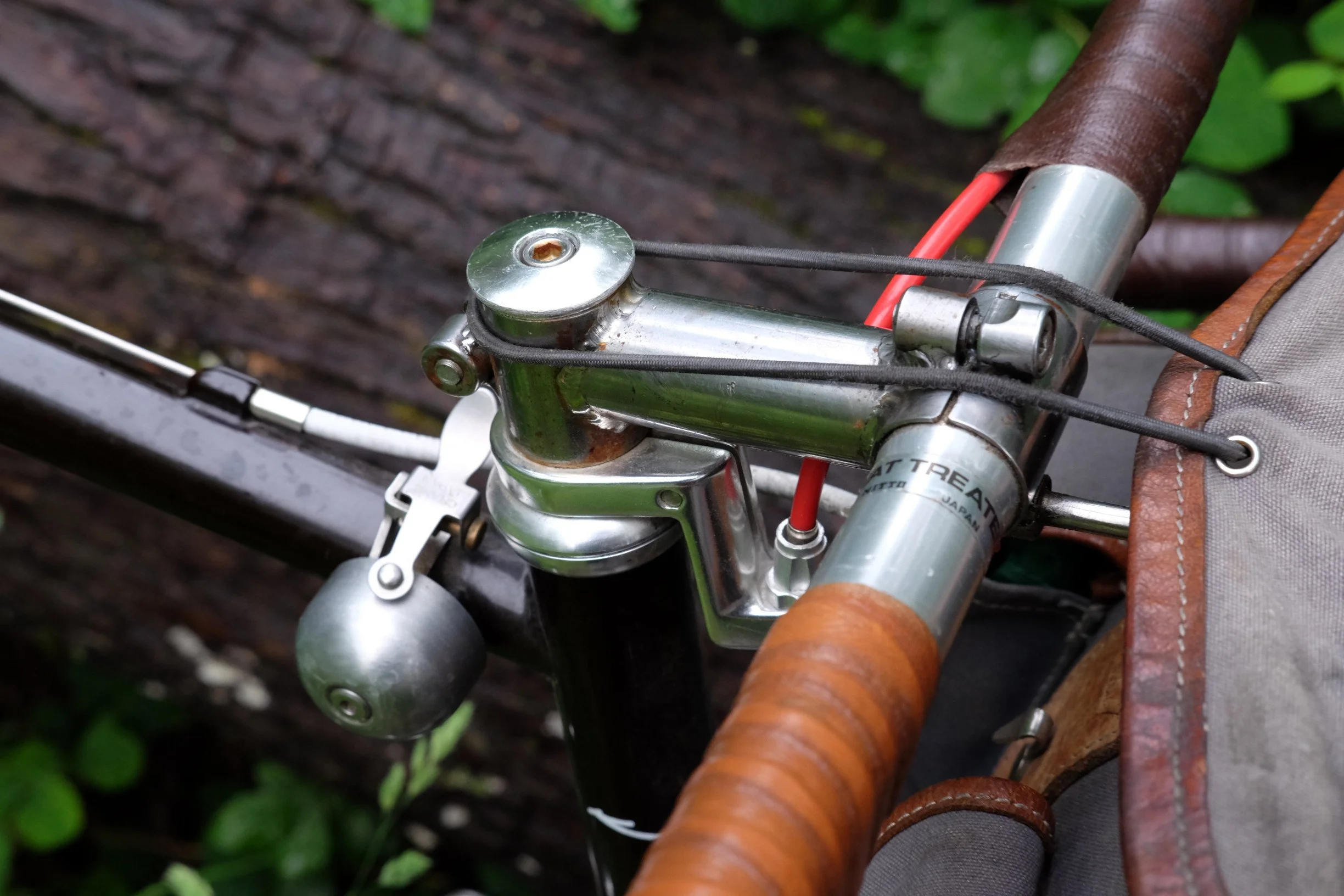
The 0-degree steel stem is custom made by the Tunk metalworking team. I had a -10degree stem earlier, but I wanted to try an even more upright position and also to see how the 0-deg stem with no spacers works visually. So far I've really liked the position, my handlebar is now quite exactly level with the saddle. This makes it very comfy in cruising speeds and the drops are very accessible when wanting to go fast.
The stem angle is also a general aesthetic question I’ve tried to work on. The bikes I find most interesting at the moment are early 1930s french touring bikes, before the "classical" period took over. Many of these have special stems and many of them have some other angle than what became the standard -17 degree "parallel" stem. I enjoy the purposeful and relaxed look of the non-parallel stems. I'm also constantly leaning more into what I consider "pure" geometry in bicycles, meaning no structural compromises due to purely visual solutions, like the -17 angle stem is when used with spacers underneath, a style seen constantly. The 0deg stem on the other hand simply goes from A to B on the most direct line.
Saddle
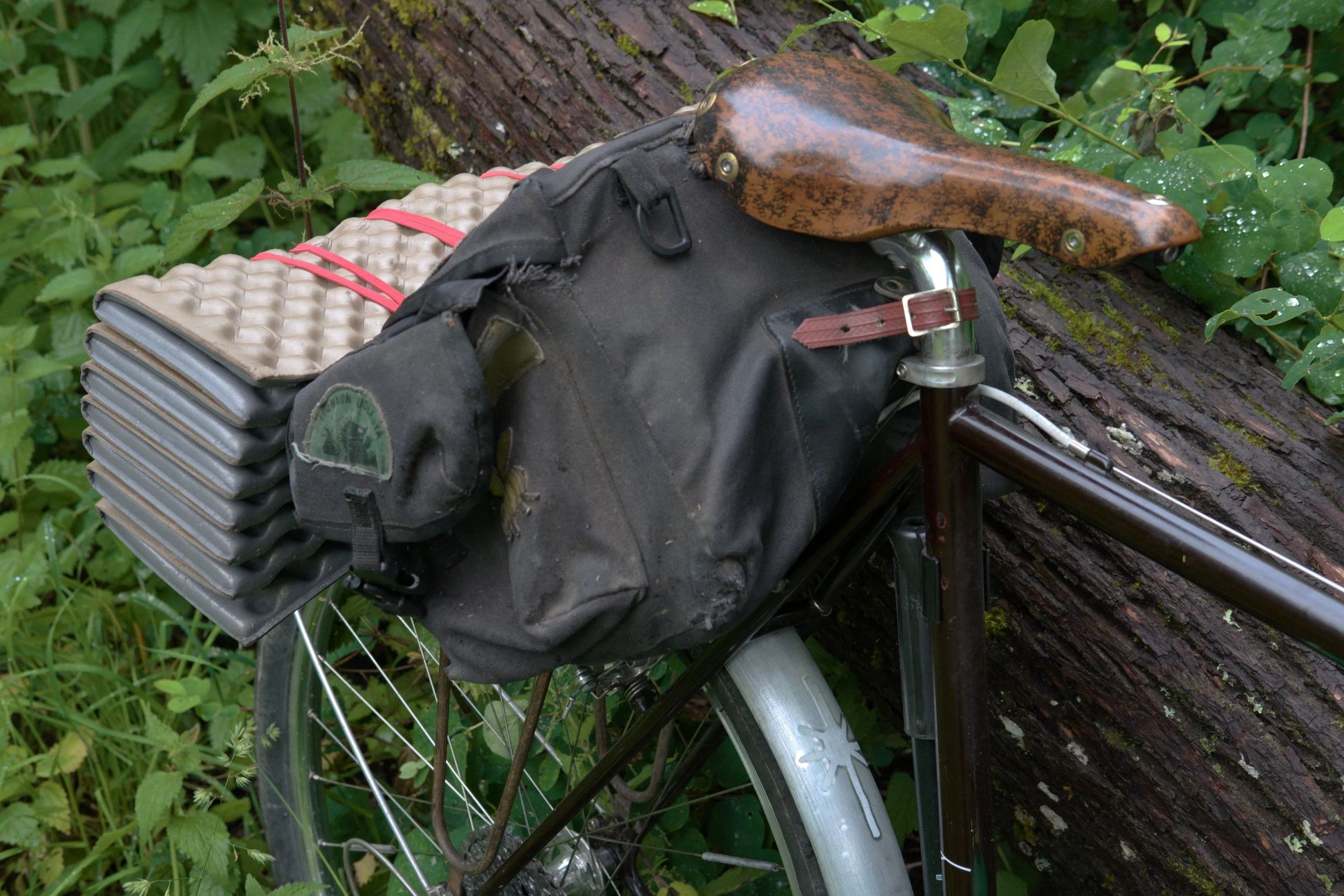
As for the saddle, I'm using a leather Gilles Berthoud Aravis. I am a proponent of natural materials for aesthetic and ecological reasons, but I believe that they also have one attribute that sets them far above synthetics: they get better with age and not the other way around. A leather saddle will adapt to your personality and body while gathering beautiful patina. A plastic product usually starts out "perfect" or "whole" and then deteriorates. A leather shoe or saddle sees its peak of comfort just before it becomes too worn to be usable anymore and I think there is some beauty in that. You grow together and not slowly separate.
Whether it’s the saddle or just a good fit, I very rarely have butt issues. I never ride in chamois and very rarely in any cycling specific pants, and only use moisturizing cream when riding 10+ hours in a day. A good and informed and tested choice of pants is of course still of paramount importance when riding longer distances, even if they are not cycling specific.
Bags and racks
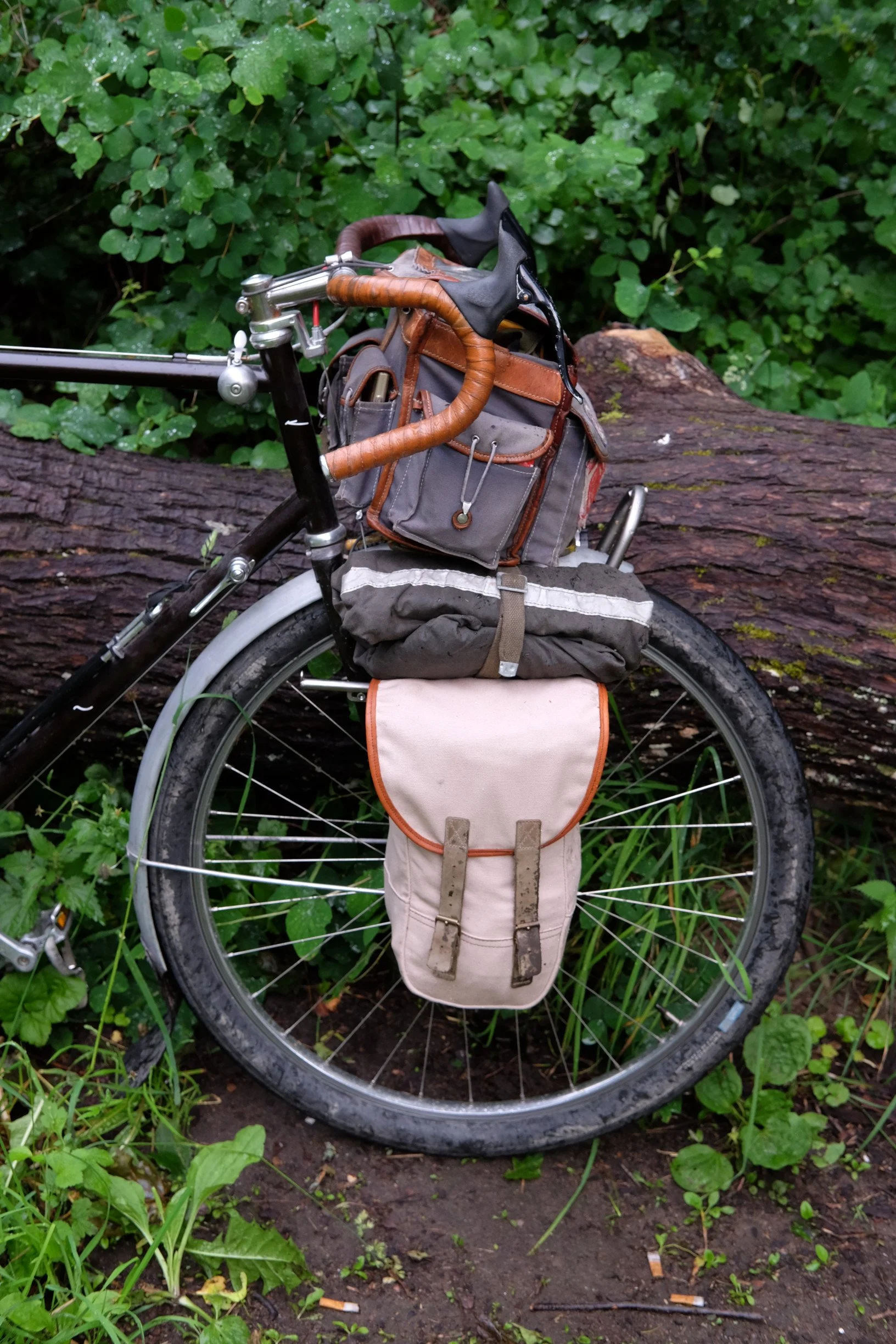
For the ever-so-important carry capacity, I have fitted two racks, a small platform in the rear and a handlebar bag support in the front. On the rear platform I strap on a jacket or a rain cape if they don't fit in the handlebar bag, or randomly shaped objects that I buy or find and need to take someplace. The french antique tubular steel rear rack I have weighs around 400 grams. I could live without it and save that weight, but I find I use it very often. Sometimes I take it off if I feel like it, and then put it back again.
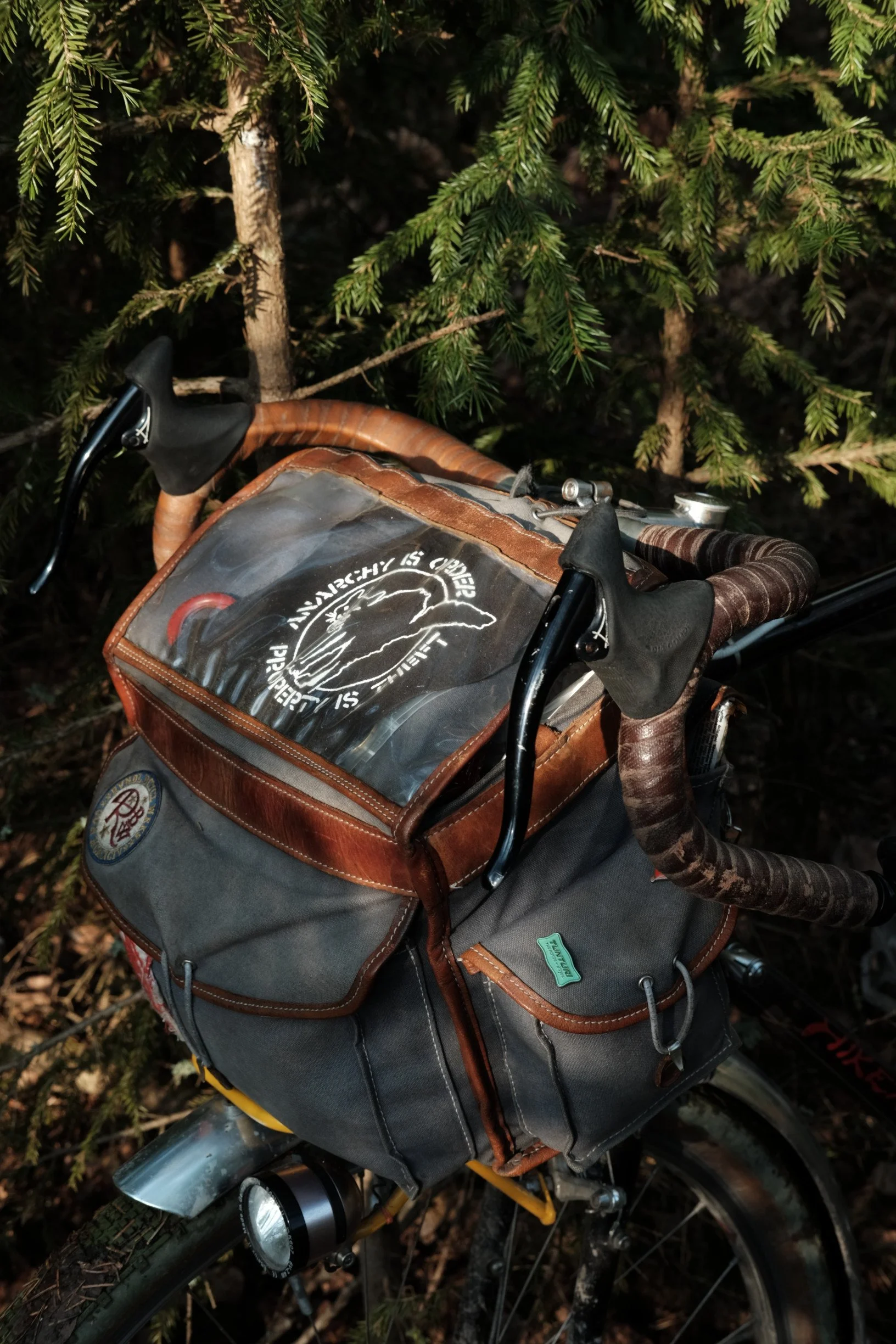
All my essentials and daily items I keep in the handlebar bag, which is quick and easy to take off and put on thanks to the decaleur . This makes it very handy in everyday situations where you need to park your bike multiple times a day. The Gilles Berthoud GB25 bag has a capacity of about 10 litres, which is enough for most days and situations. Usually it contains my wallet, keys, phone, an inner tube or two, some tools, snacks, an extra piece of clothing or two, a book, a camera, a towel in summer time, notebook and pen, a lighter, spoon, knife etc. This leaves some space for extra snacks or other items.
In addition to the front and rear racks, I carry a simple musette bag in a side pocket, in which I can stuff groceries or library books etc that don't fit in the front bag on my way home. Quite often I find myself with the handlebar bag bulging all over, random stuff strapped onto the rear rack, and carrying a musette also overflowing with food or flea market finds.
More accessories
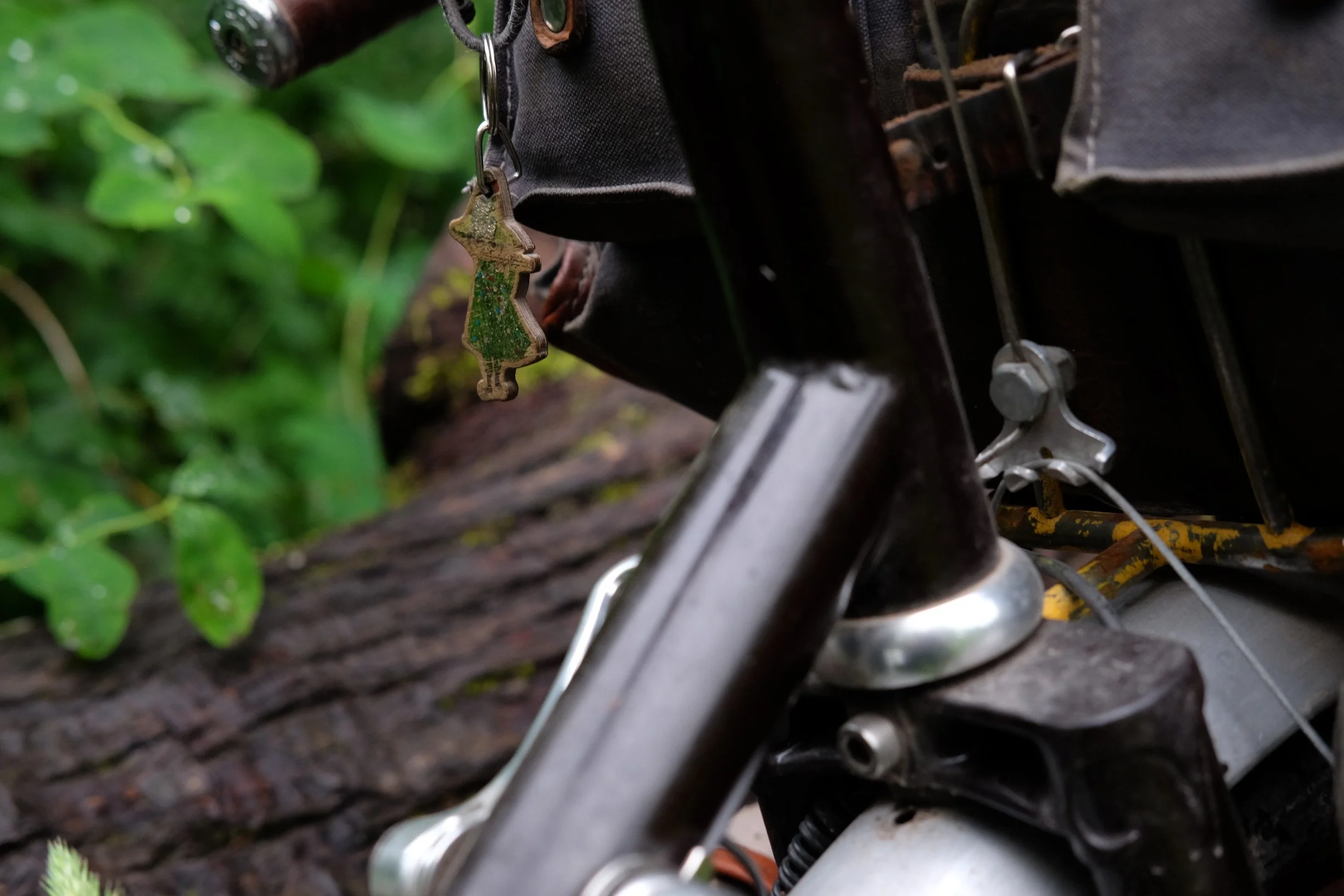
A real-world bicycle would not be complete without a bell and lights. The Hike-Use has dynamo wire routing thru the fork and the frame, but I've only bothered to do the rear routing internally. For now, the lights work great as they are. The front is a standard SON Edelux II. Super good light, nothing to complain about. The rear wire is routed through the down tube, out of the bottom bracket shell and then inside the rolled fender edge to the fender-mounted Herrmans H Trace Mini. Opening the rolled edge on the Pelago fender was a real pain but once done it works well. Overall the lights are quite well protected and do what they should. The rear light did blow its condensator though, and the standlight no longer works
In addition to standard equipment, I have also experimented with using a rear-view mirror which I have found quite useful. The one I have is a Busch & Müller Cycle Star. It's cheap and it works. And it looks freaky in the right way.
Conclusions
At least for the time being, everything on this bike just works. (Except for the rear standlight). There is really nothing I’d like to change, but maybe the frame and fork for the production model! For once I have taken the time and patience to assemble everything very carefully, using only good condition high quality parts, not always the case when building up my own bikes, which tend to have lots of random little problems due to weird well-worn parts and “I’ll just do this quickly and fix it later”-type of assembly procedure. Lately I’m trying to stop tinkering on bikes and riding them more instead!
As I am hugely biased, I don’t think I can say anything brief and still credible about the feel and ride quality of the bike. It would need very careful consideration and philosophical inquiry from all angles. But it is no surprise that it works well for me, as it is a direct continuum of the bike Myyrä mentioned in the beginning, with small refinements. The bike does display some wobble at times, when sprinting very hard, or when the tire pressure is too low, or when cargo is loaded in a funny way, say, in a huge saddlebag. But I believe some compromise in stability and cargo capacity must be made in order to have a soft and comfortable, springy and appropriately nerveux bicycle.
It rips when needed, is calm when correctly handled and has yet never disagreed in carrying me or my belongings. Everything one can ask from a light touring bicycle, in my opinion.
Parts used:
-Tunk prototype frame set size "59"
-custom Tunk stem and front rack
-Gilles Berthoud GB25 bag
-René Herse 'Randonneur' handlebar 42cm with Velox cotton tape and shellac
-Dia-Compe brake levers
-Simplex SLJ shift levers
-Gilles Berthoud Aravis saddle
-Kalloy seatpost, random clamp
-TA Specialites Pro5vis crankset 46/30 chainrings
-MKS Allways pedals
-YBN 8 speed waxed chain
-Sunrace 8-speed cassette 12-26
-Campagnolo Record Titanium rear derailer
-Sunrace XC6000 front derailer
-Dia-Compe DC980 brakes with Kool Stop Supra2 pads
-Pelago fenders DIY matte finish, Berthoud stays, Helkama mud flap
-Herrmans H-trace rear light
-SON Edelux II front light in rose pink
-SON 28 front hub
-Halo 6rd rear hub
-DT Swiss Competition & Revolution spokes mix
-Pacenti Brevet rims, 32h
-René Herse Switchback Hill EL 48-584 (summer) and Juniper Ridge EL 48-584 tires (winter)
-Zéfal pump and bottle cage
-Crane E-ne bell
